Showing posts with label 1971. Show all posts

Thursday, December 11, 2025

War - War (1971)

Year: 1971 (CD 1992)
Label: Avenue Records, ARG Records (Europe), 74321 30737 2
Style: Rock, Rhythm and Blues, Funk
Country: Long Beach, California, U.S.
Time: 40:38
Format: Flac Tracks 16/44,1 kHz
Size: 265 Mb

War (originally called Eric Burdon and War) is an American funk/soul/rock band from Long Beach, California, formed in 1969.
The band is known for several hit songs in the 1970s (including "Spill the Wine", "The World Is a Ghetto", "The Cisco Kid", "Why Can't We Be Friends?", "Low Rider", and "Summer"). A musical crossover band, War became known for its eclectic blend of different musical styles, an amalgam of the sounds and styles the band members heard living in the racially diverse ghettos of Los Angeles.
Their album The World Is a Ghetto was Billboard's best-selling album of 1973. The band transcended racial and cultural barriers with a multi-ethnic lineup. War was subject to many lineup changes over the course of its existence, leaving member Leroy "Lonnie" Jordan as the only original member in the current lineup; four other members created a new group called the Lowrider Band.
(en.wikipedia.org/wiki/War_(band)#Discography)

01. Sun Oh Son (05:59)
02. Lonely Feelin' (04:36)
03. Back Home (06:46)
04. War Drums (03:53)
05. Vibeka (08:04)
06. Fidel's Fantasy (11:17)

UploadyIo     365file     FreedlInk

All my files:     UploadyIo     DailyUploads     KatFile

Saturday, December 6, 2025

Groundhogs - Split [Remastered] (1971)

Year: March 1971 (CD 2003)
Label: Liberty (UK & Europe), 07243 584819 2 1
Style: Rock, Blues Rock
Country: England
Time: 64:39
Format: Flac Tracks 16/44,1 kHz
Size: 400 Mb

Unlike other contemporary bands, economy of notes was not part of the Groundhogs agenda. On Split, more than any other Groundhogs album, they played in a shamanic whirling that shattered and scattered the beat around in several directions at once. The frenzied drumming of Ken Pustelnik reduced the kit to the role of moronic streetgang defenseless against one lone Kung Fu hero. Stun-guitars wah-wah’d and ricochet’d at random against concrete walls, leaving passers by mortally wounded but deliriously happy. Even Pete Cruickshank’s bass, that one remaining anchor, was no anchor at all, but a freebass undermining the entire structure. As McPhee explained in a Zigzag interview of the time: “[Ken] just wallops everything in sight and sometimes I lose him completely. Like I often come back in during a solo and can’t work out where he is — so I just have to play a note and let it feed back until I can find my way back in. And Pete doesn’t help either, because he’s all over the place and he follows me rather than Ken … so when we fall apart, we really fall apart.”
The brutal honesty of this quote showcases Tony McPhee’s determination to follow his muse to the end. His singing is confused and compassionate, dazed and un-macho at a time of hoot‘n’holler chest beating. And despite the wonder-fuelled strengths of Split’s first side, each song is reduced to the anonymity of mere numbers: “Split 1”, “Split 2”, “Split 3” and “Split 4”. Yet each is complete and each is anything but anonymous. The furious “Split 1” careers through its description of McPhee’s “suicidal derangement” as he termed it with murderous bass and wah guitar interplaying. “Split 2” de-tunes itself into awesome/awful life with a chasm guitar riff that snare shatters into a tearing riff account of McPhee leaping out of bed in black hole terror, before the floor of the room gives way and he ends: “I must get help before I go insane”.
(full version: headheritage.co.uk/unsung/album-of-the-month/groundhogs-split)

01. Split [Part One] (04:29)
02. Split [Part Two] (05:14)
03. Split [Part Three] (04:30)
04. Split [Part Four] (05:43)
05. Cherry Red (05:43)
06. A Year In The Life (03:15)
07. Junkman (05:02)
08. Groundhog (05:53)
09. Split [Part One] [Bonus Track, Live] (09:46)
10. Split [Part Two] [Bonus Track, Live] (06:17)
11. Split [Part Four] [Bonus Track, Live] (04:31)
12. Cherry Red [Bonus Track, Live] (04:10)

UploadyIo     365file     FreedlInk

All my files:     UploadyIo     DailyUploads     KatFile

Friday, December 5, 2025

Curved Air - Second Album [Japanese Ed. SHM-CD] (1971)

Year: September 1971 (CD Apr 8, 2015)
Label: Warner Music (Japan), WPCR 16300
Style: Progressive Rock, New Age
Country: London, England
Time: 42:27
Format: Flac Tracks 16/44,1 kHz
Size: 285 Mb

The aptly titled “Second Album” catches Curved Air at the peak of their popularity following the success of the single “Back Street Luv” which remains one of their best known tracks. However in line with the high turnover that was to characterise the band’s line-up, seeds of discord were growing between guitarist Francis Monkman and multi-instrumentalist Darryl Way which led to one side being dedicated to tracks penned by Way and other members of the band while the other saw all the Monkman compositions lumped together.
The second album is always a tricky step for a band who achieve success with their first LP. Usually recorded in the gaps of a busy touring schedule, with little time to come up with new material, it can be a band’s undoing. However “Second Album” is a good effort which opens with not one but two bangs, the excellent “Young Mother” that includes an excellent instrumental break in its midst and the already mentioned “Back Street Luv”. “Jumbo” shows a band stretching its wings with the use of a string section. “You Know” is another good rocker that clearly displays the influences of american band Spirit described by Darryl Way in the liner notes, the excellent hook played in unison by the keyboard and the guitar works a treat.”Puppets” meanders a little and might be the only real filler track here but things pick up instantly with “Everdance” where Curved Air’s trademark violin and an almost chidlike-nursery rhyme lyric make it instantly memorable. Monkman’s inventivity shines through on “Bright Summer’s Day 1968” with its unusual melodies and time signature changes. Closing off the second side is the ambitious “Piece of Mind”, again a track where Monkman’s singular music vision is well displayed. This carefully constructed music suite manages to stay interesting for the whole course of its thirteen minutes.
(louderthanwar.com/curved-air-second-album-album-review/)

01. Young Mother (05:58)
02. Back Street Luv (03:41)
03. Jumbo (04:10)
04. You Know (04:11)
05. Puppets (05:29)
06. Everdance (03:08)
07. Bright Summer's Day '68 (02:54)
08. Piece Of Mind (12:53)

UploadyIo     365file     FreedlInk

All my files:     UploadyIo     DailyUploads     KatFile

Thursday, December 4, 2025

Miller Anderson - Bright City (1971)

Year: 1971 (CD 2004)
Label: Walhalla Records (Europe), WH 90321
Style: Rock, Folk Rock
Country: Houston, Renfrewshire, Scotland (12 April 1945)
Time: 36:07
Format: Flac Tracks 16/44,1 kHz
Size: 224 Mb

Miller Anderson (born 12 April 1945) is a UK-based blues and rock guitarist and singer. He worked extensively with Ian Hunter in the formative years of the 1960s, before either of them achieved significant success. They worked in bands such as the Scenery and At Last The 1958 Rock 'n' Roll Show (later called Charlie Woolfe), and Anderson is referenced in the title track of Hunter's 1976 album All American Alien Boy ("well I remember all the good times me and Miller enjoyed, up and down the M1 in some luminous yo-yo toy"). Anderson would later guest on two Hunter solo albums. Apart from pursuing his solo career, he was a member of the Keef Hartley Band. Other groups Anderson has been associated with are the Spencer Davis Group, Broken Glass, the Dukes, Mountain, Savoy Brown, T.Rex and Chicken Shack. In early 2006, he joined the British Blues Quintet with Maggie Bell, Zoot Money, Colin Hodgkinson and Colin Allen. In the spring of 2016, Anderson returned to the studio and in July 2016 released a new album, Through the Mill.
(en.wikipedia.org/wiki/Miller_Anderson_(musician))

01. Alice Mercy (To Whom It May Concern) (06:47)
02. The Age Of Progress (03:29)
03. Nothing In this World (04:17)
04. Bright City (03:07)
05. Grey Broken Morning (04:28)
06. High Tide, High Water (07:55)
07. Shadows 'Cross My Wall (06:02)

UploadyIo     365file     FreedlInk

All my files:     UploadyIo     DailyUploads     KatFile

Sunday, November 30, 2025

Jon Lord (Deep Purple) - Gemini Suite (1971)

Year: October 1971 (CD 1987)
Label: Line Records (Germany), LICD 9.00122 O
Style: Modern Classical, Progressive Rock
Country: Leicester, England (9 June 1941 - 16 July 2012)
Time: 47:24
Format: Flac Tracks 16/44,1 kHz
Size: 208 Mb

After the 1969 classical / rock fusion Concerto for Group and Orchestra, Jon Lord was commissioned to write a follow-up. This was Gemini Suite, five long movements inspired by the members of Deep Purple, and performed live in September 1970 at the Royal Festival Hall with The Light Music Society Orchestra (the album of the concert was issued in 1993 as Gemini Suite Live). Jon Lord then recorded it in the studio as his first solo project in 1971, with the London Symphony Orchestra conducted by Malcolm Arnold and soloists drawn from the rock world. Gemini Suite was an important step for Lord and led to albums such as Windows (1974) and Sarabande (1976).
The album was originally released in Europe and America in 1971 with different cover artwork. The 1973 US reissue featured a third version of the cover artwork. In 1983 the album was re-released on LP in Germany and four years later also for the first time on CD.
(en.wikipedia.org/wiki/Gemini_Suite)

Album recorded and mixed in the analog domain - AAD. That is, a minimum of digital processing.
A=Analog. D=digital. The first letter stands for how the music was recorded. The second letter for how it was mixed. The third letter stands for the format (all CD's will have D as the last letter).

01. Guitar (09:00)
02. Piano (08:07)
03. Drums (07:22)
04. Vocals (05:51)
05. Bass-Guitar (05:04)
06. Organ (12:00)

UploadyIo      365file     FreedlInk

All my files:     UploadyIo     DailyUploads     KatFile

Thursday, November 27, 2025

Edgar Winter - Edgar Winter's White Trash (1971)

Year: 1971 (CD 1989)
Label: Epic Records (US), EK 30512
Style: Blues Rock, Rock and Roll, Funk, Gospel
Country: Beaumont, Texas, U.S. (December 28, 1946)
Time: 43:30
Format: Flac Tracks 16/44,1 kHz
Size: 286 Mb

A quite brilliant album and no mistake and maybe the man’s most beloved of all his album releases that combines a heady mixture of rock, R&B, gospel and funk. When this album first appeared in 1971 it blew a breath of fresh air through the album releases of the time. Highlights include a smattering of gospel with Fly Away (featuring a full vocal chorus that adds the uplifting spirit of the track) and Save the Planet (a real rabble rousing song that demands that you jump off your chair and clap your hands in time to the words) on one side of the coin along with chart material such as the lower end of the Top 40 cut, Keep Playin’ That Rock and Roll while not forgetting the lovely Dying to Live that includes some fine piano work and pokes an effective dig at Vietnam, the cause celebre of the time.
In terms of audiophile reproduction, this track is a good example of the nature of the pressing which is effectively quiet without any blurring in the upper mids or smudging of the bass. There is a tremendous dynamic range in evidence here. Winter’s piano is accurate and tonally solid while Winter’s own vocal delivery is passionate, fervent but lusty in terms of the complexity that can be heard through those rasping vocal chords of his.
If there is one overarching personality of this album that links each track together, it is its joyous nature and sense of never-ending rhythm, a forward motion that also creates a perfect sense of escapism. I will bet that, before long, once you’ve learned a few lines of your own, you won’t be able to resist in singing along to much of this disc yourself.
(theaudiophileman.com/edgar-winters/)

Album recorded and mixed in the analog domain - AAD. That is, a minimum of digital processing.
A=Analog. D=digital. The first letter stands for how the music was recorded. The second letter for how it was mixed. The third letter stands for the format (all CD's will have D as the last letter).

01. Give It Everything You Got (04:32)
02. Fly Away (03:02)
03. Where Would I Be (03:59)
04. Let's Get It On (05:05)
05. I've Got News for You (03:56)
06. Save the Planet (05:41)
07. Dying to Live (04:04)
08. Keep Playin' That Rock 'n' Roll (03:46)
09. You Were My Light (05:02)
10. Good Morning Music (04:20)

UploadyIo     FreedlInk     365file

All my files:     UploadyIo     DailyUploads     KatFile

Monday, November 24, 2025

Daevid Allen (Gong, Soft Machine) - Banana Moon (1971)

Year: July 1971 (CD 1995)
Label: Spalax Music (France), 14945
Style: Progressive Rock, Garage Rock
Country: Melbourne, Australia (13 January 1938 - 13 March 2015)
Time: 38:32
Format: Flac Tracks 16/44,1 kHz
Size: 258 Mb

When he's eventually popped his clogs (for the man turns 76 in a few days from now), Daevid Allen may only ever be remembered for his long-running input into arguably one of the most influential bands of the psychedelic rock genre, Gong. However, long before such a band existed the man was running around the world, meeting up with musical poets, disgruntling government authorities due to his visa running out and generally cooking up some of the most otherworldly stories known to man (and it's not just the pot-head pixies I'm referring to either). After having had the time of his life producing the strangest music of the late 60s under the Soft Machine and Gong banners, Allen decided to go on a more personal venture into the world of music, thus creating his first solo album, Bananamoon.
Bananamoon is a completely different kettle of fish to Allen's work with Gong and Soft Machine, though still very much drug-addled and otherworldly all the same. For his debut solo album, Allen still used numerous musicians as he did with his previous two bands on various songs. Therefore, what we have in Bananamoon is not just one musician's input, but a rather large handful of musicians all contributing their respective talents to each and every song. As a result, every song here is different in its own way, though there are times when a song can lose itself amidst psychedelic music.
(full version: sputnikmusic.com/review/60482/Daevid-Allen-Bananamoon/) Review by Robert Davis. January 10th, 2014

01. Time Of Your Life (03:27)
02. Memories (03:37)
03. All I Want Is Out Of Here (04:51)
04. Fred The Fish (02:31)
05. White Neck Blooze (05:50)
06. Stones Innocent Frankenstein (03:22)
07. & His Adventures In The Land Of Flip (12:03)
08. I Am A Bowl (02:47)

UploadyIo     FreedlInk

All my files:     UploadyIo     DailyUploads     KatFile

Sunday, November 16, 2025

Delaney & Bonnie & Friends - Motel Shot [Japan Ed.] (1971)

Year: March 1971 (CD Jun 25, 1998)
Label: Atco Records (Japan), AMCY-2765
Style: Blues, Gospel, Funk
Country: U.S.
Time: 45:52
Format: Flac Tracks 16/44,1 kHz
Size: 278 Mb

The magic of the late-night jam session is one of those rock & roll legends that, much like Bigfoot, doesn't have a lot of concrete evidence to support it. But Delaney & Bonnie believed in it strongly enough to try to put one on tape. Released in 1971, Motel Shot was intended to document the sound and vibe of the after-show jams that Mr. and Mrs. Bramlett often took part in while on the road. After an attempt to record one such jam in the living room of recording engineer Bruce Botnick, Delaney & Bonnie and their friends ended up doing it over again in a recording studio. But if Motel Shot doesn't seem as spontaneous as the principals wanted it to be, it does have a loose, playful feel that's honestly winning. The performances are almost entirely acoustic, and the set is dominated by traditional blues, gospel, and country standards that this crew could ease into comfortably and bend to their moods. Given that Delaney & Bonnie's friends for these sessions included Duane Allman, Leon Russell, John Hartford, Dave Mason, Gram Parsons, and Joe Cocker, it's no great surprise that this material is significantly more accomplished that most folks' musical goofing around, even if Jim Keltner is just slapping an empty box instead of playing a drum kit. And Delaney & Bonnie are both in fine voice on Motel Shot, passionate but very much in the moment, while the gospel jam of "Takin' About Jesus" features some powerful vocal interplay between Bonnie and Cocker. You can't plan a moment of spontaneous brilliance, but Delaney & Bonnie were just smart enough to know their muse didn't like to be forced, and Motel Shot is an admirable compromise between a 2 a.m. guitar pull and an acoustic studio session, and it was also their last truly effective album.
(allmusic.com/album/motel-shot-mw0000738488)

01. Where the Soul Never Dies (03:24)
02. Will the Circle be Unbroken (02:42)
03. Rock of Ages (02:17)
04. Long Road Ahead (03:25)
05. Faded Love (04:03)
06. Talkin' About Jesus (06:51)
07. Come on in My Kitchen (02:41)
08. Don't Decieve Me (Please Don't Go) (03:54)
09. Never Ending Song Of Love (03:20)
10. Sing My Way Home (04:02)
11. Going Down the Road Feeling Bad (05:12)
12. Lonesome and a Long Way From Home (03:55)

UploadyIo     DailyUploads     TurboBit

All my files:     UploadyIo     DailyUploads     KatFile

Thursday, November 6, 2025

Rory Gallagher (Taste) - Deuce [Japanese Ed.] (1971)

Year: 28 November 1971 (CD Apr 25, 2007)
Label: BMG Japan Inc. (Japan), BVCM-37881
Style: Blues, Blues Rock
Country: Cork, Ireland (2 March 1948 - 14 June 1995)
Time: 51:39
Format: Flac Tracks 16/44,1 kHz
Size: 341 Mb

Rory Gallagher's second solo offering, Deuce, is arguably the studio album that best reflects the Irish guitarist's ferocity in his preferred medium, live. Deuce also represents the peak of his ‘power trio career’, surpassing any Taste album and narrowly edging out his remarkable debut, Rory Gallagher, released just six months prior to this marvel.
Gallagher was clear that it was on stage that he expressed himself best, so when he set about producing his second solo album he decided to put the recording sessions after live performances, to harness the energy of the live shows and leave the production skeletal, with just vocals, bass, drums and guitar. Of course, Gallagher's guitar wasn't just anything, his worn '61 Stratocaster was capable of unleashing electrical storms in which several people seemed to be playing.
Take the opening track, Used To Be, for example, where the guitar leads the way until his R&B-like vocals come in. It's a devastating start on his unbridled guitar, and indicates that we are in the presence of a true master. But whoever thinks of Gallagher only as a marvellous guitarist is also missing out on the composer capable of such delights as I'm Not Awake Yet, in which touches of British folk can be appreciated. Moreover, his mastery of the acoustic is similar to that of the electric and he is capable of embellishing the song with a beautiful and expressive solo.
The acoustic blues number Don't Know Where I'm Going reveals Gallagher's excellent sense of humour; sounding somewhere between Ronnie Lane and Steve Marriott. In Your Town and Should've Learnt My Lesson successfully approach his beloved blues rock, sounding gritty and direct. While There's A Light offers another taste of his more melodic and sensitive side, with another guitar solo that is not so much a display of technique as a song within a song. The album reaches its peak at the close, with Crest Of A Wave, a song that features fantastic bass playing by the indispensable Gerry McAvoy, and some incredible guitar work by our protagonist, again shining with the slide, and achieving a cutting, raw and aggressive sound.
Deuce, released on 28 November 1971, made it clear that Rory Gallagher was inaugurating the imperial phase of his career, with a raw and gritty sound that would be reflected in his mythical live shows, such as the outstanding Live In Europe that arrived the following year. The flame had been lit and Rory was crowned as one of the greats.
(guitarsexchange.com/en/unplugged/1079/rory-gallagher-deuce-1971/)

01. I'm Not Awake Yet (05:06)
02. Used To Be (05:24)
03. Don't Know Where I'm Going (02:42)
04. Maybe I Will (04:15)
05. Whole Lot Of People (04:57)
06. In Your Town (05:47)
07. Should've Learnt My Lesson (03:36)
08. There's A Light (05:59)
09. Out Of My Mind (03:05)
10. Crest Of A Wave (06:00)
11. Persuasion (Bonus Track) (04:43)

UploadyIo     DailyUploads     TurboBit

All my files:     UploadyIo     DailyUploads     KatFile

Wednesday, November 5, 2025

The Who - Who's Next (1971)

Year: 2 August 1971 (CD Dec 17, 1984)
Label: MCA Records (US), MCAD-37217, DIDX-152
Style: Classic Rock, Rock, Pop Rock
Country: London, England
Time: 43:13
Format: Flac Tracks 16/44,1 kHz
Size: 269 Mb

Who's Next is the fifth studio album by English rock band the Who. It developed from the aborted Lifehouse project, a multi-media rock opera conceived by the group's guitarist Pete Townshend as a follow-up to the band's 1969 album Tommy. The project was cancelled owing to its complexity and to conflicts with Kit Lambert, the band's manager, but the group salvaged some of the songs, without the connecting story elements, to release as their next album. Eight of the nine songs on Who's Next were from Lifehouse, the lone exception being the John Entwistle-penned "My Wife". Ultimately, the remaining Lifehouse tracks would all be released on other albums throughout the next decade.
The Who recorded Who's Next with assistance from recording engineer Glyn Johns. After producing the song "Won't Get Fooled Again" in the Rolling Stones Mobile Studio, they relocated to Olympic Studios to record and mix most of the album's remaining songs. They made prominent use of synthesizer on the album, particularly on "Won't Get Fooled Again" and "Baba O'Riley", which were both released as singles. The cover photo was shot by Ethan Russell; it made reference to the monolith in the 1968 film 2001: A Space Odyssey, as it featured group members standing by a concrete piling protruding from a slag heap in Easington Colliery, County Durham, apparently having urinated against it.
The album was an immediate success when it was released on 14 August 1971. It has since been viewed by many critics as the Who's best album and one of the greatest albums of all time.
(1001albumsgenerator.com/albums/5MqyhhHbT13zsloD3uHhlQ/whos-next)

Album recorded and mixed in the analog domain - AAD. That is, a minimum of digital processing.
A=Analog. D=digital. The first letter stands for how the music was recorded. The second letter for how it was mixed. The third letter stands for the format (all CD's will have D as the last letter).

01. Baba O'Riley (04:58)
02. Bargain (05:31)
03. Love Ain't For Keepin' (02:10)
04. My Wife (03:33)
05. The Song Is Over (06:15)
06. Gettin' In Tune (04:48)
07. Going Mobile (03:41)
08. Behind Blue Eyes (03:41)
09. Won't Get Fooled Again (08:31)

UploadyIo     DailyUploads     TurboBit

All my files:     UploadyIo     DailyUploads     KatFile

Monday, November 3, 2025

Procol Harum - Broken Barricades [MFSL-CD] (1971)

Year: April 1971 (CD 1987)
Label: Mobile Fidelity Sound Lab (US, Japan, West Germany),  MFCD 846
Style: Progressive Rock, Classic Rock
Country: Southend-on-Sea, Essex, England
Time: 35:10
Format: Flac Tracks 16/44,1 kHz
Size: 200 Mb

And so the evolution of Robin Trower's importance to Procol Harum reaches its peak (and, unfortunately, finale). Apparently the band came to the conclusion that Trower's guitar was indeed the saving grace of Home, so they took the next logical step and based this album almost completely around that particular strength. A good half of the album can easily fall into the hard-rock category, and the tracks that aren't (with one exception) still feature Trower prominently. I can see where, possibly, those who fell in love with the band with Shine on Brightly could be disappointed, as the album, while still more than a bit 'artsy,' gets away from the basic 'group sound' established on that album.
The album does have some tracks that don't quite cut the mustard for me, but not any more than on a typical Procol Harum album, so I'm not particularly bothered. Of these, the title track is a low point – it's uncharacteristically built around an unimpressive synth loop, with nothing great in the vocal melody or lyrics to redeem it (not to mention no guitar work), and at 3:11 it's easily a good minute-and-a-half overlong. I'm also not that fond of Luskus Delph – it wants so much to get by just on 'oh, isn't that pretty,' but aside from the OK vocal melody, there's simply too little substance (strings and all) to make it so. And again, what is it with this sudden need on Brooker's part to use a synth to try and create 'beauty' when he'd already shown his great skill at using 'traditional' keyboard instruments to do so perfectly well?
The other six tracks, however, are all aces – they won't fit one's traditional conception of PH, but they're great nonetheless. Simple Sister gets the album off to a terrific start, with a great guitar riff serving as the foundation while Brooker yells his head off (he isn't the most convincing rocker in the world, but he tries), and a great instrumental chunk in the middle based around a different bass/piano riff while Trower first builds the tension with his riffage and then does a bunch of totally effective and efficient solos, with strings and horns gradually popping up to remind that this is, in fact, still Procol Harum you're listening to. It's a weird combination of materials, definitely, but then I'm all for weirdness when it's a synonym for originality, and I'd definitely be more than a bit surprised if there were any other rock songs that quite resembled this little ditty.
Other high quality hard rock tunes on this album include Memorial Drive, a great riff-driven groove (with semi-bombastic lyrics that sound oddly out-of-place but don't hurt anything), Power Failure, with a neat rolling piano riff augmented by power chords (and some random 'live' cheering in the middle, for whatever reason), and the closing Trower-sung Poor Mohammed, which rocks so well that I find myself desperately wishing that the band could have included more tracks along these lines and made the album longer. The main riff is just killer, especially that little slide thing at the end of each iteration, and I haven't even mentioned the crunchy soloing at the end. Go Robin go!
(full version: procolharum.com/99/mcferrin_rev-brok-barr.htm)

01. Simple Sister (05:52)
02. Broken Barricades (03:14)
03. Memorial Drive (03:48)
04. Luskus Delph (03:48)
05. Power Failure (04:33)
06. Song For A Dreamer (05:41)
07. Playmate Of The Mouth (05:06)
08. Poor Mohammed (03:05)

UploadyIo     DailyUploads     TurboBit

All my files:     UploadyIo     DailyUploads     KatFile

Thursday, October 30, 2025

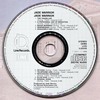
Jade Warrior - Jade Warrior (1971)

Year: 1971 (CD 1988)
Label: Line Records (Germany), LICD 9.00548 O
Style: Progressive Rock, Rock
Country: 1970–2011 or 2014; United Kingdom
Time: 44:13
Format: Flac Tracks 16/44,1 kHz
Size: 161 Mb


The core membership of Jade Warrior is/was Jon Field (flute etc.) and Tony Duhig (guitar). During their youths, Jon and Tony independently developed an interest in Jazz, African music, and Latin American music. They met in the early 1960s while driving forklift trucks in a factory, and soon learned that they shared musical interests and intentions. At the time, they were just beginning to play instruments themselves (Jon a set of congas, and Tony a cheap guitar which he tuned quite unconventionally to open C).
Each of them bought a quarter-track tape recorder, capable of sound-on-sound "pingponging". They began composing their own music, and experimenting with building up multi-layered overdubbed amalgams of the sorts of music which moved them... all done with practically no money. Jon has described this process as "our training... trying to build a cathedral with the sort of things you'd find in your back yard." This complex layered and overdubbed sound would be a hallmark of Jade Warrior's music throughout their entire career to date.
They spent the next years going to clubs, listening to jazz and blues, and in 1965 formed a rhythm & blues band called "Second Thoughts" headed up by lead singer Patrick Lyons. Second Thoughts released one four-song EP. During the same period, Tom Newman (later the engineer for Mike Oldfield's Tubular Bells), Alan James, Pete Cook and Chris Jackson had formed the first incarnation of the "Tomcats" (one of several bands known to have used this name).
In 1965, both of these two bands split up. Patrick Lyons departed, joining up with Alex Spyropoulos in a duo named "Nirvana" which subsequently released an on-the-charts single "Rainbow Chaser" and a total of five LPs (with Jade Warrior members performing on one of them: 1971's Local Anaesthetic).
The Tomcats re-formed with a new line-up: Tom Newman, Alan James, Chris Jackson, Jon Field and Tony Duhig. The band spent the best part of 1965 and 1966 in Spain, acting as a spearhead for British pop music in that country. They released four EPs which did very well on the Spanish charts. The four EPs by The Tomcats were collected onto a single LP by Acme Records, and a pressing of The Second Thoughts' four-song EP was included.
After returning to England in 1966, the Tomcats were re-named "July", playing psychedelic-pop/rock written by Tom Newman and Pete Cook. July issued one album, which has been released in three different versions. The original version was July. A later release Second of July contains alternate versions and additional outtakes, and a third release Dandelion Seeds is a re-release of July plus the outtakes. July disbanded in 1968. Tony Duhig auditioned successfully for a role in a band called Unit Four Plus Two (a group which had released a hit song "Concrete and Clay" a few years earlier but had since lost all of its original members save the lead singer). Other recent additions to Unit Four Plus Two were bass guitarist and vocalist Glyn Havard, and drummer Allan Price. This line-up of Unit Four Plus Two did a brief club tour in the U.K., and then broke up.
Musical ideas continued to develop and they hooked up with Glyn again to work them in to songs. The first piece they worked on became 'The Traveller' (released on the first Vertigo album). They called the band Jade Warrior after one of the dance dramas they had composed for a London drama school.
(jadewarrior.com)

01. The Traveller (02:40)
02. A Prenormal Day At Brighton (02:45)
03. Masai Morning (Including Casting Of The Bones, The Hunt, A Ritual Of Kings) (06:44)
04. Windweaver (03:43)
05. Dragonfly Day (Including Metamorphosis, Dance Of The Sun Spirit, Death) (07:45)
06. Petunia (04:46)
07. Telephone Girl (04:54)
08. Psychiatric Sergeant (03:08)
09. Slow Ride (02:36)
10. Sundial Song (05:08)

Listen. Full Album: Jade Warrior - Jade Warrior (1971)


imagebam.com imagebam.com imagebam.com imagebam.com

 
All my files:     UploadyIo     DailyUploads     KatFile

Monday, October 27, 2025

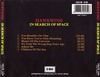
Hawkwind - In Search Of Space (1971)

Year: 1971 (CD 199?)
Label: Fame Records (UK), CD-FA 3192 CDM 7 520252
Style: Rock, Progressive Rock, Psychedelic Rock
Country: Ladbroke Grove, London, England
Time: 42:23
Format: Flac Tracks 16/44,1 kHz
Size: 235 Mb

Hawkwind are an English rock band known as one of the earliest space rock groups. Since their formation in November 1969, Hawkwind have gone through many incarnations and have incorporated many different styles into their music, including hard rock, progressive rock and psychedelic rock. They are also regarded as an influential proto-punk band. Their lyrics favour urban and science fiction themes.
Many musicians, dancers and writers have worked with the band since their inception. Notable musicians who have performed in Hawkwind include Lemmy, Ginger Baker, Robert Calvert, Nik Turner and Huw Lloyd-Langton. However, the band are most closely associated with their founder, singer, songwriter and guitarist Dave Brock, who is the only remaining original member.
Hawkwind are best known for the song "Silver Machine", which became a number three UK hit single in 1972, but they scored further hit singles with "Urban Guerrilla" (another Top 40 hit) and "Shot Down in the Night". The band had a run of twenty-two of their albums charting in the UK from 1971 to 1993.
en.wikipedia.org


imagebam.com imagebam.com imagebam.com

UploadyIo     DailyUploads

All my files:     UploadyIo     DailyUploads     KatFile

Saturday, October 25, 2025

May Blitz - The 2nd Of May [Japanese Ed. SHM-CD] (1971)

Year: 1971 (CD Oct 27, 2010)
Label: Universal Music (Japan), UICY-94683
Style: Hard Rock, Heavy Metal
Country: England
Time: 38:28
Format: Flac Tracks 16/44,1 kHz
Size: 258 Mb

MAY BLITZ were formed by vocalist/guitarist Jamie Black who recruited Tony Newman on drums, (ex Sounds Incorporated and Jeff Beck Group), and Reid Hudson (bass, vocals) in 1969. The original lineup featured bassist Terry Poole and drummer Keith Baker, from Bakerloo, but both left before recording anything for the band. Baker had a better offer from Uriah Heep, and went to record "Salisbury" with the band.
The band survived long enough to record two incredibly heavy, powerful and psychedelic albums with strong blues undertones and progressive tendencies, despite the lack of keyboards. These were released on Vertigo, who we also associate with Black Sabbath and Uriah Heep - but the music is probably heavier than either. Their style comes in somewhere around High Tide and the Pink Fairies - but these are really ballparks.
Their debut album is a must-hear for anyone curious about the development of heavy music, and features a production in which it is not only almost possible to smell the ganja smoke, but is also rich and clear enough to provide the striking dynamic contrasts the music needs, as it occasionally veers from ambience to crushing riffs in the blink of an eye. It is certainly very unpredictable, even now.
Why this artist must be listed in progarchives.com :
Because they're an overlooked progressive blues/rock/psychedelic band with a massive scarcity value, and music that is original and highly progressive to boot!
(progarchives.com/artist.asp?id=1756)

01. For Mad Men Only (04:16)
02. Snakes And Ladders (04:42)
03. The 25th Of December 1969 (03:12)
04. ''In Part'' (06:09)
05. 8 Mad Grim Nits (04:33)
06. High Beech (05:02)
07. Honey Coloured Time (04:14)
08. Just Thinking (06:18)

UploadyIo     DailyUploads

All my files:     UploadyIo     DailyUploads     KatFile