Saturday, May 24, 2025

Jeff Beck - Emotion & Commotion [Japanese Ed.] (2010)

Year: 10 April 2010 (CD Jun 23, 2010)
Label: Warner Music (Japan), WPZR-30373/4
Style: Instrumental, Blues Rock, Jazz Funk, Jazz Rock
Country: Surrey, England (24 June 1944 - 10 January 2023)
Time: 49:39
Format: Flac Tracks 16/44,1 kHz
Size: 308 Mb

Charts: UK #21, AUS #49, CAN #9, FRA #74, GER #30, JPN #9, KOR #46, NL #77, SWE #35, US #11.
Of the three artists who emerged as "guitar gods" on the British rock scene of the 1960s—all three coming up through the same group, The Yardbirds—Jeff Beck is, more than perennial favorites Eric Clapton and Jimmy Page, the one who has taken the most risks throughout his career. They don't always work, either; on the other hand, his performance at the Ronnie Lane ARMS concert in 1983 may have been less than a resounding success, but the guitarist deserved major props for going out there and going for it, as opposed to Clapton's classy but safe set and Page's embarrassing attempt to turn "Stairway to Heaven" into an instrumental. All the more reason, then, for the long overdue critical and popular acclaim for Performing This Week... Live at Ronnie Scott's (Eagle Records, 2008) and Beck's ensuing, sold-out 2009 world tour. And all the more reason, too, to celebrate Emotion & Commotion, his first studio record in seven years.
More than most—and certainly more than Clapton and Page—Beck's distinctly un-guitar god-like and melodic, non-poser approach to guitar has sung out with all the wrenched emotion and nuanced inflection of the human voice, and he's never been as truly human as he is on Emotion & Commotion. It may disappoint those who prefer a harder-edged Beck but in this combination of arrangements for orchestra and guitar, cinematic originals and reinvented classics, Beck has never sounded more exposed, more fragile. He may not demonstrate the guitar pyrotechnics of his peers, but the long evolution of his distinctive tone and allegiance to the strength of melody—dating as far back as 1975's Blow By Blow (Epic, 1975) and the enduring "'Cause We've Ended As Lovers" and, even earlier, on his surprising version of "Morning Dew" with Rod Stewart from his 1968 debut,Truth (Epic)—has, in many ways, been leading to this very point.
Interspersed with group tracks that, amongst others, feature his touring band of the past couple of years alongside guest vocalists like Joss Stone and Imelda May, are four strictly orchestrated tracks, representing some of Beck's most painfully beautiful playing to date. Ranging from the tender traditional opener, "Corpus Christi Carol," and Puccini's poignant "Nessun Dorm," to music from two films—The Wizard of Oz's iconic "Somewhere Over the Rainbow" and the more recent Atonement's "Elegy for Dunkirk," where Beck's guitar intertwines so seamlessly with Olivia Safe's soaring operatic vocal as to join the two together as one voice—Beck manages to find the true core of the music and of his own playing, delivered with spare elegance and unparalleled emotion.
The more electrified tracks are no less powerful. Beck seems to have found a foil, in keyboardist Jason Rebello, to transcend his late-1980s/early-1990s work with Tony Hymas. "Hammerhead" has all the edge Beck's rockier fans love—the gritty wah-wah, searing wammy bar and ring modulated distortions—but with a riff-driven, orchestrated backbone that recalls Beck's groundbreaking, spontaneous work with producer George Martin on Blow By Blow. Like "Hammerhead," the funkier chill-out of "Serene" is co-written by Beck and Rebello, and combines the guitarist's matchlessly tasteful tone with the keyboardist's more sophisticated harmonies.
The tracks featuring May and Stone are equally compelling. Stone, in particular, brings a contemporary kind of sultry to "I Put a Spell on You," while May turns the James Shelton's 1950 ballad "Lilac Wine" into an equally modern torch song, with Pete Murray's orchestrations—as throughout the disc—strong without ever becoming saccharine.
After the more rock-centric Performing This Week... , Emotion & Commotion presents a very specific side to Beck that's been there all along but, with this wonderfully chosen set of material, has never been heard in such sharp focus. For a guitarist who came up through the British scene of the 1960s, Beck has matured into a player whose voice is assured and utterly without parallel. The aptly titled Emotion & Commotion may not possess any overt guitar pyrotechnics, but its deep beauty and profoundly vocal lyricism simply could not have come from anyone but Jeff Beck. A modern classic.
(allaboutjazz.com/jeff-beck-emotion-and-commotion-by-john-kelman)

Jeff-Beck2010-Emotion-Commotion-jpn-07 Jeff-Beck2010-Emotion-Commotion-jpn-01

FilesPayout     UploadyIo     KatFile

All my files:     KatFile     UploadyIo     FilePv

Love - Out Here [2LP on 1CD] (1969)

Year: December 1969 (CD 2008)
Label: Collectors' Choice Music (US), CCM-931
Style: Garage Rock, Psychedelic Rock
Country: Los Angeles, California, U.S.
Time: 68:20
Format: Flac Tracks 16/44,1 kHz
Size: 407 Mb

This set marked several firsts for Love. Not only was Out Here (1969) their initial foray away from the Elektra imprint, it would be their only double-LP package. After the relative failure of Forever Changes (1968), co-founder Arthur Lee (vocals/rhythm guitar) disbanded the unit and then re-formed with Frank Fayad (bass), George Suranovich (drums), Jay Donnellan (lead guitar), and Gary Rowles (lead guitar). Granted, it's certainly not the greatest work in their catalog. However, Out Here is proof that Lee's faculties for quirky and personable pop and rock compositions had yet to elude him. The results -- unquestionably a mixed bag -- present listeners with evidence of the combo's increasingly heavier approach, as well as a few selections that hearken back to the lighter whimsy of the earlier ensemble. The latter circumstance is clearly demonstrated, ranging from the acoustic introspection of "Listen to My Song," to the full-blown group jam on the 11-plus minute "Love Is More Than Words or Better Late Than Never" featuring Rowles' inspired electric fretwork. The update of "Signed D.C." -- the original having been a key component of Love's 1966 self-titled debut -- is given a weightier blues-fueled edge that remains drenched in the emotive angst of its precursor. The band's subsequent (and final) outing False Start (1970) continued mining the same heavy metal vein tapped on "I'm Down" and the suitably wordless "Instra-Mental"." While not exactly throwaways, "Abalony," "Discharged," and the droll funeral procession ode "Car Lights on in the Daytime Blues" are more filler than killer. Still, all in all, Arthur Lee enthusiasts can discover plenty of music to Love on Out Here.
(allmusic.com/album/out-here-mw0000308405)

Love69-Out-Here-back Love69-Out-Here-front

FilesPayout     UploadyIo     KatFile

All my files:     KatFile     UploadyIo     FilePv

Friday, May 23, 2025

Steely Dan - Gaucho [Japanese Ed. SHM-CD] (1980)

Year: November 21, 1980 (CD June 25, 2008)
Label: Universal Music (Japan), UICY-93521
Style: Jazz Rock, Pop Rock, Yacht Rock
Country: New York, U.S.
Time: 37:58
Format: Flac Tracks 16/44,1 kHz
Size: 249 Mb

Charts: US #9, AUS #9, CAN #18, GER #57, NL #44, NZ #7, NOR #5, SWE #15, UK #27. NZ: Gold; US: Platinum; AUS: 2x Platinum.
Exceptional difficulties plagued the album's production. By 1978, Walter Becker and Donald Fagen had established themselves as the only two permanent members of Steely Dan and were using a revolving cast of session musicians to record the songs they wrote together. However, the pair's working relationship began to become strained, largely because of Becker's escalating drug use. During the course of the recording sessions for Gaucho, Becker was hit by a car late one Saturday night while walking home to his apartment on the Upper West Side. He managed to push the woman he was with out of harm's way, but sustained multiple fractures in one leg, a sprain in the other leg, and other injuries. During his six-month recovery, he suffered from secondary infections. While Becker was in the hospital, he and Fagen continued their musical collaborations via telephone.
Becker's personal problems continued to mount when his girlfriend, Karen Roberta Stanley, died of a drug overdose at his home on January 30, 1980. Her family sued Becker for $17.5 million in January 1981, claiming that he had introduced Karen to cocaine, morphine, barbiturates, and heroin. The court later ruled in Becker's favor.
(en.wikipedia.org/wiki/Gaucho_(album))

Steely-Dan80-Gaucho-jpn-tracklist Steely-Dan80-Gaucho-jpn-back

FilesPayout     UploadyIo     KatFile     VexFile

All my files:     KatFile     UploadyIo     FilePv

Chris De Burgh - Spanish Train And Other Stories [Japanese Ed.] (1975)

Year: November 1975 (CD April 12, 1989)
Label: Pony Canyon Inc. (Japan), D18Y4107
Style: Art Rock, Progressive Rock, Pop Rock
Country: U.S. / U.K. / Santa Fe Province, Argentina (15 October 1948)
Time: 43:33
Format: Flac Tracks 16/44,1 kHz
Size: 243 Mb

Charts: UK #78, CAN #64, NOR #35. CAN: Platinum.
Releases in some markets, like in North America, used different cover art from those in Europe. Rather than the simple white-on-black text of the European releases, the North American releases depicted an image of a distant train moving along under an evening sky.
The title track is a story about a train carrying the souls of the dead to the Underworld. God and Lucifer are playing Poker – gambling with the souls. Lucifer cheats and wins the game. The song finishes with the stanza:
    And far away in some recess
    The Lord and the Devil are now playing chess,
    The Devil still cheats and wins more souls,
    And as for the Lord, well, he's just doing his best...
    — "Spanish Train"
The song was deemed blasphemous in South Africa, and a ban was ordered.
A&M records sued to get the ban overturned – the suit was eventually successful. However, while the suit was in progress, A&M released the album under the title Lonely Sky and Other Stories (without "Spanish Train"). This album is considered [according to whom?] a collector's item today [when?] – copies are extremely rare. Perversely, the ban only applied to the LP record, so the cassette issue of "Spanish Train" was always freely available.
(en.wikipedia.org/wiki/Spanish_Train_and_Other_Stories)

Album recorded and mixed in the analog domain - AAD. That is, a minimum of digital processing.
A=Analog. D=digital. The first letter stands for how the music was recorded. The second letter for how it was mixed. The third letter stands for the format (all CD's will have D as the last letter).

Chris-De-Burgh75-Spanish-Train-jpn-back Chris-De-Burgh75-Spanish-Train-jpn-02

FilesPayout     UploadyIo     KatFile

All my files:     KatFile     UploadyIo     FilePv

Thursday, May 22, 2025

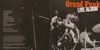
Grand Funk Railroad - Live Album [Japanese Ed.] (1970)

Year: 1970 (CD 26.09.2002)
Label: Capitol Records (Japan), TOCP-67004
Style: Garage, Hard Rock
Country: Flint, Michigan, U.S.
Time: 79:08
Format: Flac Tracks 16/44,1 kHz
Size: 553 Mb

Every Home Should Have One: Grand Funk Railroad's Live Album.
On July 15, 1973, Grand Funk released the classic We're An American Band. In 2008, Masterplan's Roland Grapow told Classic Rock why he loved the band's 1970 Live Album.
"I heard this album for the first time back in 1971 when my neighbour and I borrowed it from his older brother’s collection. As a 12-year-old schoolboy from Hamburg I was already listening to Creedence Clearwater Revival and Uriah Heep. Further down the line, Slade’s Alive album (1972) was another very important album for me. But Grand Funk Railroad’s incredible mixture of blues, soul and rock just blew me away. It was a very important album in the development of heavy metal.
"By the time I first heard them, Grand Funk had already released On Time (1969), Grand Funk (aka the Red Album, also 1969), Closer To Home (1970) and Survival (1971), so I went out and bought everything, including my own copy of Live Album. Because it was the 70s, bands made two albums a year in those days. Masterplan take two years to make a record, which is way too long.
"Grand Funk had the perfect sound for a power trio As Homer Simpson would famously describe it: ‘[Guitarist/vocalist] Mark Farner’s wild, shirtless lyrics, the bong-rattling bass of Mel Schacher and the competent drum woirk of Don Brewer’.
"But seriously, Mark Farner inspired me to become a musician; I started singing and playing guitar after becoming hooked on that album. Their version of The Animals’ Inside Looking Out is great, and their own songs, like Heartbreaker, Paranoid and In Need are still among my all-time favourites.
"Although the critics didn’t like them, and the radio also turned its back, Grand Funk still became enormous in America, selling millions of records. Probably because of that they didn’t play in Europe too often, though I got to see them in Hamburg in 1974. By that time they had added extra musicians. And because it was in a nice, seated venue it felt a bit too stiff. But I was glad that I saw them anyway.
"I always liked Grand Funk best as a three-piece. The bass filled out the spaces a little more than with most trios, and Farner used to play some Hammond organ. They also had quite a distorted sound, which I really liked.
"I never tire of listening to Live Album. The best thing about them was the sheer excitement of their live performance. With the studio work, some of that got lost. On Live Album the singing was wilder, the drumming was more powerful, there was a lot more magic. They did release another concert set, Caught In The Act (1975), but it was done as a four-piece. If you haven’t listened to Grand Funk before, this is the place to start. Especially the remastered version, which has wonderful sound quality."
(www.loudersound.com. By Dave Ling "Classic Rock" January 09, 2008)

01. Introduction (02:27)
02. Are You Ready (03:38)
03. Paranoid (07:19)
05. Heartbreaker (07:10)
06. Words Of Wisdom (00:52)
07. Mean Mistreater (04:53)
08. Mark Say's Alright (05:13)
09. T.N.U.C. (10:54)
10. In Need (Live) (11:30)
10. Inside Looking Out (13:43)
11. Into The Sun (11:26)

imagebam.com imagebam.com imagebam.com

FilesPayout     UploadyIo     KatFile

All my files:     KatFile     UploadyIo     FilePv

Styx - Kilroy Was Here [Japanese Ed. SHM-CD] (1983)

Year: February 22, 1983 (CD Oct 26, 2016)
Label: Universal Music (Japan), UICY-77889
Style: Soft Rock, Rock Opera
Country: Chicago, Illinois, U.S.
Time: 40:51
Format: Flac Tracks 16/44,1 kHz
Size: 264 Mb

Charts: US #3, AUS #45, NO #3, SWE #6, UK #67. US & CAN: Platinum.
Although Dennis DeYoung's concept about man being replaced by robots in the near future failed to get off the ground, Kilroy Was Here still harbored two of the band's best singles. "Don't Let It End" almost captures the same endearing qualities as their number one hit, "Babe," did four years earlier, peaking at number six, and the synthesized novelty of "Mr. Roboto" went all the way to number three, accompanied by a lively and rather extravagant Dennis DeYoung at the helm. It was the song's mechanically spoken chorus and slight disco beat that made it Styx's fifth Top Ten single up to that point, overshadowing the rest of the album's tracks. Pretentious, weakly composed, and rhythmically anemic, songs like "Cold War," "Heavy Metal Poisoning," and "Double Life" couldn't even keep the album's main idea interesting, solidifying the fact that Styx's forte was singles, not conceptual pieces. The saxophone playing from Steve Eisen gathers some redemption, cropping up here and there, but even some decent guitar work from Shaw and DeYoung can't save the rest of the album. Brought back to life in the late '90s in an automobile commercial, "Mr. Roboto" gained somewhat of a minor resurgence more than 15 years after its chart life.
(allmusic.com/album/kilroy-was-here-mw0000191941)

Kilroy-Was-Here-SHM-CD-Booklet-01 Styx-Kilroy-Was-Here-jpn-SHM-sleeve-back

FilesPayout     UploadyIo    KatFile

All my files:     KatFile     UploadyIo     FilePv

Wednesday, May 21, 2025

Savoy Brown - Raw Sienna (1970)

Year: April 25, 1970 (CD )
Label: Deram Records (Germany), 844 016-2
Style: Rock, Blues
Country: London, England
Time: 37:35
Format: Flac Tracks 16/44,1 kHz
Size: 217 Mb

Savoy Brown, a group founded by guitarist Kim Simmonds has been around with numerous personnel changes since the Mid-1960s and is still – some 55 years later – on the road today.
Simmonds’ Savoy Brown is regarded as a mainstay in the development of British Blues Rock along with the Rolling Stones, Cream, etc. The group never made waves in the UK but gained a major underground following in the US and still maintains a solid cult status. Simmonds learned to play guitar listening to his brother’s Blues collection and evolved into a master guitarist with an unmistakable signature style.
“Getting To The Point” is fundamental Blues; however, Youlden didn’t attempt to mimic Black Bluesmen but delivered the lyrics with subtle intensity and a cadence that stamped each track with his unique vocal style. This album was the perfect prequel to the next studio album, “Raw Sienna” released in 1970.
“Raw Sienna” is a masterpiece produced and arranged by Simmonds and Youlden and a universe away from “Getting to the Point.” There are dynamic big band horn and string arrangements by bass player Tony Stevens seamlessly incorporated into some tunes. The material is thematic and follows a lyrical stream of consciousness – an unfolding, reflective narrative about life on the shadowy fringes of society. Everything about “Raw Sienna” is accomplished in musicianship, production, and the penning of cohesive lyrics.
My favorite cut is the fatalistic tune, “Needle and Spoon,” a song about heroin addiction.
“Don’t need no women don’t need no wine
‘Cause life is sweet when you hit the mainline
I sleep with the sun and I rise with the moon
And I feel alright with my needle and spoon
I feel alright with my needle and spoon.”
The lyrics on “Raw Sienna” aren’t merely motheaten cliches hung onto to the pentatonic scale; they are well-crafted vignettes about life. The album has depth and well-worth listening to.
(jazzsyndicatepromotions.wordpress.com/2020/11/19/savoy-brown-raw-sienna/)

Savoy-Brown70-Raw-Sienna-back Savoy-Brown70-Raw-Sienna-inside

FilesPayout     UploadyIo     KatFile

All my files:     KatFile     UploadyIo     FilePv

Tuesday, May 20, 2025

Bruce Springsteen - Born In The U.S.A. (1984)

Year: June 4, 1984 (CD 1984)
Label: Columbia Records (US), CD 86304
Style: Arena Rock, Pop Rock
Country: Long Branch, New Jersey, U.S. (September 23, 1949)
Time: 46:56
Format: Flac Tracks 16/44,1 kHz
Size: 306 Mb

Charts: US #1, AUS #1, CAN #1, GER #1, IRE #11, NLD #1, NZ #1, NOR #1, SWE #1, UK #1. GER: 2x Platinum; UK: 3x Platinum; AUS: 14x Platinum; NZ: 16x Platinum; CAN: Diamond; US: Diamond (17x Platinum).
East Berlin, 1988. Under a graphite sky, a familiar synthesizer riff echoes out over a vast arena. As a thundercrack snare drum underscores one of the most consistently spine-chilling intros ever, Bruce Springsteen, telecaster in hand, stares out toward half a million East Germans who've all started singing the chorus - before he's even begun the first verse.
500,000 Germans shouting "Born In The USA" in some huge-ass park in the late-eighties is plainly quite weird. But they're not American. They're not singing about being American, are they? Are they??
"Born In The USA", the title track of The Boss' mega-selling 1984 album, was much misunderstood. Accused at the same time of being repulsively nationalistic, and viciously Anti-American, the track was endorsed by conservative US politicians (including Ronald Reagan) as an exemplar of "classic American values" whilst the bitter lyrics actually tell the story of disaffected Vietnam veteran, chewed up and spat out by his own country:
'I had a buddy at Khe Sahn
Fighting off the Viet Cong
They're still there, he's all gone
He had a little girl in Saigon
I got a picture of him in her arms'

Fire up YouTube and watch John Sayles' music video for the track. The killer punch comes near the end where you see the smiling veteran with a hole where his left eye should be.
Despite the poor sync between the video and audio, Springsteen's leather-clad delivery is scarily fierce. Heard alongside the visuals of Bruce spitting the hopeless verses, the song is revealed as far more than a knuckleheaded, jingoistic sing-a-long. It's a ragged-lunged hymn to long gone friends, a treacherous government, a stupid war, having no job, but f*** it, let’s shout the chorus until we cough up our lungs.
Springsteen’s much-discussed genius lies in finding the humanity in the everyday, punching it out with a grizzled kind of grandeur, and managing it dressed as Mad Max. That’s why our German friends, with their cold war blues and bad blow-dries, are singing along in their hundreds of thousands. Despite huge political and national gulfs, there are more similarities than there are differences.
The other songs on the album? Apart from the unsettling, tender "I’m On Fire", it’s familiar fare throughout, reliable rock and soul courtesy of Bruce and his band of E Street musos, with the added bonus of "Glory Days" and the irrepressible "Dancing In The Dark" chucked in too.
But at no point does it become as stupid, or as complex, as track 1.
(bbc.co.uk/music/reviews/j2f9/)

01. Born In The U.S.A. (04:39)
02. Cover Me (03:28)
03. Darlington County (04:50)
04. Working On The Highway (03:15)
05. Downbound Train (03:37)
06. I'm On Fire (02:41)
07. No Surrender (04:02)
08. Bobby Jean (03:48)
09. I'm Goin' Down (03:31)
10. Glory Days (04:18)
11. Dancing In The Dark (04:05)
12. My Hometown (04:36)

FilesPayout     UploadyIo     KatFile

All my files:     KatFile     UploadyIo     FilePv

Monday, May 19, 2025

Pink Floyd - Atom Heart Mother [Japanese Ed. 1st press] (1970)

Year: 2 October 1970 (CD 1988)
Label: Toshiba-EMI LTD. (Japan), CP32-5273
Style: Psychedelic Rock, Progressive Rock
Country: London, England
Time: 52:10
Format: Flac Tracks 16/44,1 kHz
Size: 242 Mb

Charts: UK #1, AUS #30, CAN #39, FRA #4, GER #8, NLD #5, SWI #64, US #55. UK, GER, US & FRA: Gold.
At one time, Pink Floyd was far-out, freaky even. Their work in the electronic capabilities of rock was more advanced than most people recognize. Their use of a third, rear, sound source anticipated quadraphonics. And their music, if it wasn’t memorable, reached into the limits of their experimentation. Most other groups, when they thought in terms of electronics, thought only of painful feedback. Pink Floyd used sounds no one else thought of and could make them lyrical besides. Their last album, Ummagumma, while a bit drawn-out, had all their best elements.
Atom Heart Mother is a step headlong into the last century and a dissipation of their collective talents, which are considerable.
Side one is a suite, almost a symphony. It has a lot in it. They use orchestral elements and a choir. The best that can be said for it is that it’s craftsman-like and that in spite of its many parts, it’s an entity. But that’s all.
It turns out to be an Impressionist orchestral sketch of (I think) a morning that includes some rock elements. As Impressionism, it’s occasionally effective, but on a very imitative level. The beginning does sound sunrisey. And, there are sounds that draw pictures. But, as a whole it’s awful schmaltzy and a little vapid.
Side two is generally worse. "If" is English folk at its deadly worst. It’s soft and silly. Ditto "Fat Old Sun."
The only redeeming feature on this side is the last cut, "Alan’s Psychedelic Breakfast" and then only partially so. The part is not the music, but the integrated Arising and Breakfast sounds.
I was listening through earphones, and so three-dimensional and realistic were the sounds that I took off the phones to see who was breaking in. I couldn’t believe it to be part of the record. Once I got over that, though, it was the same insubstantial melange as the rest of the record.
(rollingstone.com/music/music-album-reviews/atom-heart-mother-111812/) Review by Alec Dubro. December 10, 1970


Album recorded and mixed in the analog domain - AAD. That is, a minimum of digital processing.
A=Analog. D=digital. The first letter stands for how the music was recorded. The second letter for how it was mixed. The third letter stands for the format (all CD's will have D as the last letter).

01. Atom Heart Mother: Father's Shout - Breast Milky - Mother Fore/Funky Dung - Mind Yo... (23:45)
02. If (04:31)
03. Summer '68 (05:28)
04. Fat Old Sun (05:23)
05. Alan's Psychedelic Breakfast: Rise and Shine - Sunny Side Up - Morning Glory (13:01)

FilesPayout     UploadyIo    KatFile

All my files:     KatFile     UploadyIo     FilePv

Pink Floyd - Soundtrack From The Film More [Japanese Ed.] (1969)

Year: 13 June 1969 (CD 1988)
Label: Toshiba-EMI LTD. (Japan), CP32-5273
Style: Soundtrack, Psychedelic Rock, Progressive Rock
Country: London, England
Time: 45:00
Format: Flac Tracks 16/44,1 kHz
Size: 218 Mb

Charts: UK #9, FRA #2, GER #74, NLD #14, US #153. FRA: Gold.
Although it's not a studio album in the usual sense, Pink Floyd's soundtrack to the obscure 60s French hippie film More is just about worth checking out for fans of their psychedelic period. It's something of a lost treasure in the Floydian catalogue due to its variety alone, although opinions are rather mixed as to whether it's full of filler or not. I tend towards the former opinion although as with any film soundtrack, its effect depends rather on to what extent it suffers by being removed from the visuals which are supposed to go with it, and whilst, say, the Gladiator soundtrack is easy to appreciate with imagined figures of epic legend, More will tax the listener to a greater extent, not least because it's from an obscure 60s French hippie film. I make no apology for not having seen the Barbet Schroeder film that More is written for, but it sounds pretty dreadful, a kind of Requiem For A Dream of its day, with the central character being a German student who becomes literally and figuratively entangled with a female drug addict who introduces him to heroin with ultimately tragic results.
Films about addiction tend to be terrible (although the little-seen Heath Ledger and Abbie Cornish film Candy from 2006 was gripping due to the excellent performances) and reading reviews More seems to be as bad as it sounds. Yet the soundtrack is still of interest - Pink Floyd are Pink Floyd, after all, and it's easy to imagine their spacey and atmospheric music backing films. Just as with A Saucerful Of Secrets, More is rather a trip, although it's a fragmented one rather than a complete journey. It doesn't help that it's obviously a collection of songs, as treating this as an album means nothing but disappointment at the lack of flow and structure. From Avant-Garde experiments to Hard Rock freak-outs, More has it all, yet the songwriting is far from perfect, and even looked at with as little cynicism as possible the patchiness and rushed aspects stand out.
All the lead vocals were performed by David Gilmour, and the majority of the music was written by Roger Waters (especially on the first, better half) - the band were really coming together as a unit after the loss of Syd Barrett. More opens with the natural calm of Cirrus Minor, acoustic guitar and vocals soon following as the album gets off to a gentle start, very much in line with the band's first two albums. Droning organs, echoing noises - the band slip you in gently, and then proceed to bash you over the head with the sudden and dementedly off-kilter rocking of The Nile Song. Voivod fans will recognise the cover from 1993's The Outer Limits, and it is a good song, enjoyably heavy and stomping riffs and a soaring vocal performance from Gilmour - at least until it fades out, not really having gone anywhere. The Crying Song follows, soft and gentle again, and the album seems to meander onwards from there with the occasional highlight standing out depending on who is listening. The Jazzy instrumental Up The Khyber is sure to please Nick Mason fans, for example, with its technical battery and discordant organ build-up, whilst Green Is The Colour is strong, reminiscent of the Folk Rock of the period.
Without a doubt, the first half is superior to the second, where the band really seemed to run out of ideas - aside from the rather stunning Cymbaline, a dreamy song that could easily have fit on either of the previous albums, there's little of interest. Hardcore fans apparently prefer the live versions available on various bootlegs, which can be up to twenty minutes long, and to be honest that's the final death knoll for More. It's hard to find the band's typical genius in the likes of Party Sequence, a minute-long bit of bongo, or Ibiza Bar, another noisy rocker that is very similar to The Nile Song. Ultimately, it's one for collectors only - the best songs are better done elsewhere, the weak songs are only worth listening to once, so unless you're incapable of living without owning every Pink Floyd album, you can safely give More a miss. It's not terrible, but neither is it really worth pursuing when surrounded by so much excellence elsewhere in the Pink Floyd discography...
(metalreviews.com/reviews/album/6051)

01. Cirrus Minor (05:15)
02. The Nile Song (03:25)
03. Crying Song (03:34)
04. Up The Khyber (02:13)
05. Green Is The Colour (02:58)
06. Cymbaline (04:49)
07. Party Sequence (01:10)
08. Main Theme (05:31)
09. Ibiza Bar (03:16)
10. More Blues (02:12)
11. Quicksilver (07:10)
12. A Spanish Piece (01:05)
13. Dramatic Theme (02:16)

FilesPayout     UploadyIo     KatFile

All my files:     KatFile     UploadyIo     FilePv

Sunday, May 18, 2025

Love - Four Sail [3 bonus tracks] (1969)

Year: September 1969 (CD 2002)
Label: Warner Strategic Marketing (Germany), 8122 73640-2
Style: Garage Rock, Psychedelic Rock
Country: Los Angeles, California, U.S.
Time: 50:07
Format: Flac Tracks 16/44,1 kHz
Size: 329 Mb

The last Elektra studio album. I like to think of it as Love’s final album, period; since to me they are ‘Elektra Records’ and all the good things that once meant, personified.
Preceeded as it was by the towering, glittering, haunting and mysterious ‘Forever Changes’, it’s always been easy to overlook ‘Four Sail’. To mod sixties dressups, it doesn’t have the stylishness of the first two Love LPs. To fans of Forever Changes, it’s pretty much entirely without horns and acoustic guitars. Furthermore, Bryan MacLean’s gone, along with the entire original lineup (except for Arthur Lee). To many people, that’s been enough to consign it to the obscure end of an already ‘obscure-ish’ band’s catalogue.
But I have come to regard it as Love’s other masterpiece. The fuzzier, grittier, jammier side of Arthur Lee’s mystical ‘Forever Changes’ LA muse.
Four Sail is indeed a beguiling record. Its opener, the rumbling roiling ‘August’ at once features those familiar, inimitable Arthur Lee chordal stylings…mesmerizing quasi-flamenco, fat Gibson fingerpicked arpeggiations. His singing is high and stately again. His Forever Changes ‘Johnny Mathis’ voice. The jagged bark of ‘Stephanie Knows Who’ is now 2 whole albums away (but wait! We’re only on the first song). Newcomer Jay Donellan is a great lead guitarist, perhaps the best that Lee ever worked alongside (save for one other, of course). His leads are like a fluent Neil Young: All pining upper registers and countrified triplets. It works and gels as ‘Love Guitar’ though. He clearly knew what band he was joining. The song is ‘August’ in music. Thunder season. Hot & humid. High pressure. Maybe a little burnt out. It’s a Love classic.
(full version: headheritage.co.uk/unsung/reviews/love-four-sail) Review by banjo, Jan 2006ce

Love69-Four-Sail-back Love69-Four-Sail-01 Love69-Four-Sail-06

FilesPayout     UploadyIo     KatFile

All my files:     KatFile     UploadyIo     FilePv

Todd Rundgren - Something Anything [2CD] (1972)

Year: February 1972 (CD 1999)
Label: Castle Music Ltd. (UK), ESD CD 672
Style: Pop Rock
Country: Philadelphia, Pennsylvania, U.S. (June 22, 1948)
Time: 43:17, 45:59
Format: Flac Tracks 16/44,1 kHz
Size: 273, 297 Mb

To say this album is a masterpiece would be underselling it. I don’t feel this album comes up in conversation when people discuss landmark rock albums of last century, or even the 70s.
Each side is separated as follows: ‘A Bouquet of Ear-catching Melodies,’ ‘The Cerebral Side,’ ‘The Kid Gets Heavy’ & ‘Baby Needs a New Pair of Snakeskin Boots (A Pop Operetta).’ The first three sides were recorded in L.A., with every instrument and vocal by Rundgren himself. He also produced those songs. Awe-inspiring talent. The last side was recorded in New York by a ragtag group of musicians. Essentially, anyone who happened to be in or near the studio was roped in to record. The songs were written at a prolific rate thanks to Ritalin and weed.
Unusually, Rundgren, a non-proficient drummer, recorded the drums first on each track, humming the rest of the song to himself as he did it. If he made a mistake on the drums, he changed the rest of the song around the mistake as it was too difficult to go back and re-record. The hits from this one were ‘I Saw The Light’ (inspired by Carole King) and ‘Hello It’s Me,’ a cover of his own band, Nazz. But this is really an album that needs to be listened to in full (and not with two other albums between Sides B and C.)
(rs500albums.com/400-351/396)

Todd-Rundgren72-Something-Anything-back Todd-Rundgren72-Something-Anything-02

CD1:     FilesPayout     UploadyIo     KatFile

CD2:     FilesPayout     UploadyIo     KatFile

All my files:     KatFile     UploadyIo     FilePv

Grand Funk Railroad - We're An American Band [Japanise Ed.] (1973)

Year: July 1973 (CD Aug 30, 1989)
Label: Toshiba-EMI LTD. (Japan), CP21-6039
Style: Hard Rock, Classic Rock
Country: Flint, Michigan, U.S.
Time: 40:18
Format: Flac Tracks 16/44,1 kHz
Size: 265 Mb

Charts: US #2, AU #27, CA #4, JP #10, NO #12. US: Platinum.
1. Creepin' - The song title perfectly describes the general feel of the song. the lowly but smooth bass riff blends brilliantly with the subtle organ trills, giving the song a very sinister and mysterious vibe. Farner's vocals really incorporates that "live" sound and gives the sound as if he's got plenty of space to sing. Farner also lays down some killer guitar solos, and the all-out jamming at the end is awash in 70-hard rock-style psychedelia. a strong operner. 4.5/5
2. The Railroad - The song kicks off a nice blare of psychedelic organ and slowly segues nicely into a quiet guitar melody, that provides an interesting texture for Farner's soulful vocals. The vocal hook in the chorus is very catchy and arena-worthy. a nice jam in the bridge of this 6-minute workout features the skills of Farner's playing as well Brewer's manic and primal drumming. and Frost's powerfully soulful melodies on the keys. the use of trashcan-style percussion really adds to the intensity of the song as well. 4/5
3. Black Licorice - With a ridulously infectious bass riff and a funky guitar rhythm, this song right off the bat is very catch. Farner's vocals in this song just kill, and reiterates the dangerously sexual themes of the lyrics perfectly, especially in the chorus. the drumming is just wonderfully ferocious and the intense organ solo is just orgasmic. wow. 5/5
4. Loneliest Rider - The song has a pretty cool groove, but Farner's attempt at story-telling (on more serious material at least) doesn't really fly with me. there's some nice production techniques on this track- the heavily reverberated guitar and organ really gives the song that wash of psychedelia it needs. 3/5
5. Walk Like a Man (You Can Call Me Your Man) - This song has an a very catchy shout-a-long chorus and the electric piano riff and heavy drumbeat really emphasizes the machismo nature of this song. Farner's vocals works nicely with the soaring guitar licks that litter the song throughout. once again the bridge shows off their jamming skills very well, with a very blues-rock heavy guitar solo. 4/5
6. Ain't Got Nobody - This song is pretty standard fare, which is a little unfortunate. the verse and chorus are both a little bland and forgettable, though the vocal harmonies are pretty sweet. This song is all about the jazzy kind of piano progression that occurs throughout, giving the song a kind of Steely Dan/Chicago vibe. there also some sweet guitar solos in here that one can certainly indulge in. 3.5/5
7. Stop Lookin' Back - This song is chockfull of catchy and groove-oriented 70s-style riffs from every instrument. the song changes form and direction in the beginning and really demonstrates the band's ability to jam tightly as a group and still remain within a tasteful framework. plenty of psychedelic organ washes and a manic tom-infested drum beat at the end really makes this a very fun song to just lay back and enjoy. 4/5
8. We're An American Band - Here it is, the pinnacle of the album. this song is argubly to say their biggest hit, and deservingly so. this song has just a killer riff and the thunderous bass just owns. the vocals are awesome and when coupled with the lyrics, which are about partying and gettin it on with groupies, really adds to simple and fun nature demonstrated. the guitar solo is very solid and the organ really builds on the poppy psychedelic element. and did i mention this song has cowbell? Yup, this song just plain rocks. 5/5
(sputnikmusic.com/review/1215/Grand-Funk-Railroad-Were-An-American-Band/)

01. We're An American Band (03:28)
02. Stop Lookin' Back (04:54)
03. Creepin' (07:04)
04. Black Licorice (04:47)
05. The Railroad (06:12)
06. Ain't Got Nobody (04:28)
07. Walk Like A Man (04:07)
08. Loneliest Rider (05:14)

FilesPayout     UploadyIo     KatFile

All my files:     KatFile     UploadyIo     FilePv

Styx - Paradise Theatre [Japanese Ed. SHM-CD] (1981)

Year: January 16, 1981 (CD Oct 26, 2016)
Label: Universal Music (Japan), UICY-77888
Style: Soft Rock, Arena Rock
Country: Chicago, Illinois, U.S.
Time: 40:43
Format: Flac Tracks 16/44,1 kHz
Size: 273 Mb

Charts: US #1, AUS #27, NZ #30, NO #5, SWE #6, UK #8. UK: Silver; CAN: Platinum; US: 3x Platinum.
At a time when the "concept album" had all but gone out of fashion, Styx released Paradise Theatre, an album that loosely couples a fairly interesting concept with some strategically placed (albeit unrelated) pop and rock songs.
The concept itself is one of rapid decay and lament to a past Golden Age symbolized by an actual theater on Chicago’s west side built on the eve of the Great Depression and dead by the mid 50’s. Brought forward to the turbulent economic times around 1980, this concept worked well. But concept itself is not enough, in the end it is all about the music.
Although the album is a little less than the band’s best output - The Grand Illusion, four years earlier - the music did tap into a popular confluence between the band’s long-time, loyal listeners and a new crop of pop-rock fans that were suddenly starting to pay attention to durable bands from the 1970s such as Rush, Pink Floyd, Supertramp, and Styx.
Musically, Paradise Theatre contains a nice balance among the band’s three primary songwriters, Dennis DeYoung, Tommy Shaw, and James (JY) Young.
Shaw’s best contribution is the hit "Too Much Time On My Hands", which is about as good as a pop single got for that era. It contains a nice mix of synth effects, a classic guitar solo, crisp and catchy lyrics, and well-delivered vocals. Besides some great axe work, Shaw also adds the top-end harmonies that distinguishes the Styx sound.
JY’s efforts were back-to-back tracks on the album’s second side. "Snowblind" is an anti-drug song with a lugubrious feel throughout. In spite of it’s noble message for society on the surface, it was targeted by Tipper Gore’s PMRC and other anti-rock groups for allegedly backwards masking Satanic messages. The band was truly offended by these charges and would mock them on their next album, Kilroy Was Here, with genuine backwards messaging.
"Half Penny, Two Penny" may be the best rock song on the album. A mini-suite in of itself, it builds to a crescendo with some excellent lead guitar and just the right touch of piano and saxophone (by guest Steve Eisen) in the coda where repeatedly JY screams: "I wanna be free!"
But the concept itself and all the songs that surround it, truly belongs to DeYoung. "The Best of Times" provides not only the top hit on the album, but the recurring theme with the opener "A.D. 1928" and the closer "A.D. 1958". Many longtime fans (and apparently some band members themselves) lamented the heavy introduction of ballads by Denis DeYoung, starting with the soft-rock hit "Babe" on the previous album, Cornerstone. But this is a case where the ballad is supreme (and not so much sappy) with strong influence from each of the members of Styx and the obvious endorsement of fans at large.
However, some of the other "theme" songs really tend to straddle the line between legitimate rock opera and some high school theater production. This is especially true for "Rockin’ the Paradise" and "Nothing Ever Goes As Planned", both popular songs on the album, each of which can either be interpreted as entertaining or over-the-top on any given day. For this reason, Paradise Theatre never really rises to the level of excellence of the best rock operas, such as The Who’s Quadrophenia, although it is still an interesting and enjoyable listen.
A nice touch was added to top off the album, a classy, "song after the last song" in the same fashion as "Her Majesty" off Abbey Road by The Beatles. The half-minute long saloon-piano piece called "State Street Sadie", adds just a touch of nostalgia right out of the 1920s that brings home the overall theme of Paradise Theatre.
(classicrockreview.com/2011/04/1981-styx-paradise-theatre/) April 15, 2011

01. A.D. 1928 (01:08)
02. Rockin' The Paradise (03:34)
03. Too Much Time On My Hands (04:32)
04. Nothing Ever Goes As Planned (04:47)
05. The Best Of Times (04:20)
06. Lonely People (05:26)
07. She Cares (04:21)
08. Snowblind (04:59)
09. Half-Penny, Two-Penny (05:59)
10. A.D. 1958 (01:07)
11. State Street Sadie (00:26)

FilesPayout     UploadyIo     KatFile

All my files:     KatFile     UploadyIo     FilePv

Saturday, May 17, 2025

The Zoo - Presents Chocolate Moose (1968)

Year: 1968 (CD 2007)
Label: Radioactive Records (US), RRCD010
Style: Psychedelic Rock
Country: Los Angeles, California, U.S.
Time: 24:25
Format: Flac Tracks 16/44,1 kHz
Size: 162 Mb

The Zoo was a 1960s rock band based in Los Angeles, California. Their music combined heavy soul music stylings with psychedelic rock influences. It consisted of guitarist Murphy "Chocolate Moose" Carfagna, drummer Mike Flicker, bassist Terry Gottlieb, guitarist Howard Leese, and vocalist Ira Welsley.
In 1968 the group signed a contract with Sunburst Records, a division of the Attarack Corporation. The members were still in their teens, and were among the youngest groups with a record contract at the time. Sunburst was distributed by Bell Records which later became Arista Records. The album had 10 songs and a later single contained two additional songs.
Flicker and Leese worked in the music industry in Vancouver, British Columbia in the 1970s. Flicker became a successful record producer, while Leese joined the group Heart.
The album was reissued in 1993 by Ace Records, in 2001 by Big Beat Records and in 2007 by Radioactive Records.
(en.wikipedia.org/wiki/The_Zoo_(American_band))

01. Chocolate Moose (02:45)
02. Written On The Wind (02:26)
03. I've Been Waiting Too Long (02:27)
04. Soul Drippin's (02:01)
05. Get Some Beads (02:06)
06. Ain't Nobody (02:15)
07. Have You Been Sleepin' (02:29)
08. Try Me (02:18)
09. Love Machine (02:35)
10. From A Camels Hump (03:00)

FilesPayout     UploadyIo     KatFile

All my files:     KatFile     UploadyIo     FilePv

The V.I.P's - The Complete V.I.P's [2CD. 1964-1967] (2006)

Year: 1964-1967 (CD 2006)
Label: Repertoire Records (UK), REPUK 1088
Style: Garage Rock, Psychedelic Rock, Beat, Rhythm & Blues
Country: Carlisle, England
Time: 49:11, 44:55
Format: Flac Tracks 16/44,1 kHz
Size: 184, 208 Mb

The V.I.P.'s were a British R&B musical group formed in Carlisle, Cumberland, England in late 1963, out of an earlier outfit known as The Ramrods, who had formed in Carlisle in 1960. From a musical reorientation the band changed their name to Art in 1967, and released the album Supernatural Fairy Tales.
The band members at various times were: Mike Harrison (lead vocals) (ex Dino and the Danubes, The Dakotas, The Ramrods); Greg Ridley (bass guitar) (ex Dino and the Danubes, The Dakotas); Frank Kenyon (rhythm guitar) (1963–67) (born 12 October 1945, Carlisle) (ex The Teenages, The Ramrods); Jimmy Henshaw (lead guitar) (1963–67) (born James Henshaw, 20 October 1941, in Newarthill, near Motherwell, North Lanarkshire, Scotland died 1 May 2007, Carlisle) (ex The Ramrods); Keith Emerson (organ) (ex-Gary Farr & The T-Bones) (1966–1967); Luther Grosvenor (lead guitar) (1967); Walter Johnstone (drummer) (1963–67) (born 11 March 1943, Carlisle) (ex The Teenages, The Ramrods); and Mike Kellie (drummer) (1967).
When Emerson left in early 1967 to form The Nice, Harrison, Ridley, Grosvenor and Kellie changed their name to 'Art', and released one album, Supernatural Fairy Tales, produced by Guy Stevens, covering Stephen Stills' "What's That Sound (For What It's Worth)" and Felix Cavaliere's "Come on Up". The group then disbanded, with all four members of the group's final line-up forming Spooky Tooth, with the addition of the American musician Gary Wright, later that same year.
They also participated in a psychedelic album entitled Featuring The Human Host and the Heavy Metal Kids by a collective known as Hapshash and the Coloured Coat, formed by Guy Stevens and an influential British graphic design and avant-garde musical partnership between Michael English and Nigel Waymouth. The musicians involved in that project were Mike Harrison on keys and vocals, Luther Grosvenor on guitars, Greg Ridley on bass and Mike Kellie on drums, as well as Stevens, English and Waymouth. It was the first time that the term 'heavy metal' was ever used in music, even though that album had nothing to do with heavy metal music, being closer to psychedelic music. The album was issued in 1967 by Liberty Records, and contained only five songs from two minutes to more than 15 minutes of psychedelic and almost meditative state kind of music.
(en.wikipedia.org/wiki/The_V.I.P.%27s_(band))

VIPs2006-The-Complete-VIPs-06 VIPs2006-The-Complete-VIPs-02

CD1:     FilesPayout      UploadyIo     KatFile

CD2:     FilesPayout      UploadyIo     KatFile

All my files:     KatFile     UploadyIo     FilePv