Friday, April 10, 2020

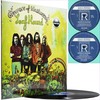
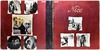
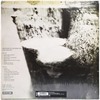
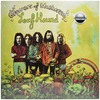
Leaf Hound - Growers Of Mushroom (1971) [Vinyl Rip]

Year: 1971 (LP 2015)
Label: Repertoire Records (UK), REP 2208, V 103
Style: Hard Rock
Country: London, UK
Time: 37:39
Format: Flac Tracks 16/44,1 kHz
Size: 261 Mb

Leaf Hound are an English 1960s/1970s hard rock band, formed from the ashes of Black Cat Bones. The group has been cited as a major influence on the stoner rock movement, namely with their iconic studio album Growers of Mushroom. Initially active between 1969 - 1971, Leaf hound reformed with a different lineup in 2004, eventually putting out a second album, performing at multiple festivals and even on occasion (Namely 2011) performing Growers of Mushroom in it's entirety.
Original Decca pressing of Growers of Mushroom are highly sought after, with mint or near-mint condition copies selling for thousands in US Dollars.
Classic Lineup Years (1969 - 1971):
Rhythm guitarist Derek Brooks and his brother, Stuart Brooks, had been in the Black Cat Bones (Who had recorded Barbed Wire Sandwich in 1968), a South London-based band that at one time featured Free's Paul Kossoff. Vocalist Peter French and his cousin, lead guitarist Mick Halls, had been in several London groups: Switch, Erotic Eel, Joe Poe, and the Brunning Sunflower Blues Band (featuring Bob Brunning). In the latter half of 1970, after the Black Cat Bones' lead guitarist Rod Price quit to join Foghat, the Brooks brothers formed a new group with Halls and French, drafting in newcomer Keith George Young on drums. This new group -- christened Leaf Hound, a name found in an anthology of stories by horror writer Herbert Van Thal. The band started playing clubs around England, sharing the stage with the likes of UFO.
A full-length recording contract with Decca Records soon followed, and the band found themselves ensconced in the Mayfair's Spot Studios, where they recorded Growers of Mushrooms in a mere 11 hours. Meanwhile, the band traveled to Germany, where their album was licensed for release by the Telefunken label. This German-only release actually preceded the official U.K. release on Decca; somewhat surprisingly, it omitted two tracks: the title song and the lead-off track, a blistering "Freelance Fiend." Telefunken also issued a single, "Drowned My Life in Fear," which was backed with the non-LP track "It's Going to Get Better." Then, in October 1971, Decca finally released the band's debut in their own country, adding back the omitted tracks. However by then, Leaf Hound had already decided to call it a day once French had joined Atomic Rooster and Cactus. Leaf Hound from that point became somewhat of a myth or mystery, the key point being the value of original copies of Growers of Mushroom.
Many labels would see to reissuing the album in the 90s including Akarma, Repertoire and Walhalla to name a few.
Reunion and Onward (2004 - Present):
In 2004 Peter French put together a new incarnation of the band and started performing shows with the earliest known of this lineup being on 10 November 2004 supporting Nazareth. The band would play more shows around Europe over the years, including appearances at Roadburn Festival, Sweden Rock Festival. In 2006 they released a limited 7" on Rise Above Records featuring a live version of "Freelance Fiend" recorded in Soho, London in September 2005. The b-side is also taken from the same recording. In 2007 Leaf Hound released a second album of brand new material (Along with a reworking of an Atomic Rooster song) in Unleashed on 'Rare Recording', with the newer songs being added to the band's live sets. In 2011 the band performed Growers of Mushroom in it's entirety at shows for it's 40th anniversary which featured a second appearance at Roadburn the next year along with an appearance at DesertFest London. In 2014, the band released a live album from a performance in Japan circa 2012 on Ripple Music.
(riffipedia.fandom.com/wiki/Leaf_Hound)

01. A1 Freelance Fiend (03:11)
02. A2 Sad Road To The Sea (04:16)
03. A3 Drowned My Life In Fear (03:00)
04. A4 Work My Body (08:11)
05. A5 Stray (03:50)
06. B1 With A Minute To Go (04:19)
07. B2 Growers Of Mushroom (02:18)
08. B3 Stagnant Pool (03:59)
09. B4 Sawdust Ceasar (04:30)
imagebam.com imagebam.com imagebam.com imagebam.com imagebam.com

KatFile
TurboBit
PixelDrain
UploadRar
Mega4up

Thursday, April 9, 2020

Uriah Heep - Salisbury (1971) [Russian Vinyl]

Year: 1971 (LP 1992)
Label: SNC Records (Russia), ME 1999
Style: Hard Rock
Country: London, England
Time: 37:56
Format: Flac Tracks 16/44,1 kHz
Size: 252 Mb

Uriah Heep - "Salisbury" (1971) a review by Igor Shveytser:
If there were a contest for the most uncertain stylistically while quite promising album in the history of rock music, "Salisbury" certainly would have been among the competitioners. But back in 1971, awards were out of question — though the ice was now broken, and music reviewers were not as violent in destroying the young English band as they were a few months before, criticising Uriah Heep’s debut work. One of the reviewers even wrote that "Salisbury" was a 100-percent improvement, comparing to the debut album, and their next album («Look At Yourself») would definitely be even better. We can only guess what was on the reviewer’s mind, because in purely musical terms (and I’m not afraid to disagree here with both critics and the authors of the songs) "Salisbury" is not just good — it is just second to none, as it was unrivalled by any of subsequent Uriah Heep’s albums, even by those that received "platinum”, "gold" and "silver" status.
It is true that "Salisbury" never reached the same status as many other Uriah Heep’s albums — but this is true only in terms of commercial success. The album did not make the band rich and famous to be considered as successful. And it only charted for nine weeks in the USA peaking at No. 103.
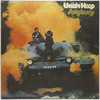
In other words, it was not a triumph, if we do not take in account the 1977 re-issue of "Lady In Black" (but that is another story — at least, from a different era). At the turn of 1970-71’s Uriah Heep were a young band, actively promoted by their enthusiastic manager, and this was the reason for music critics to be somewhat biased in their opinions. Moreover, the lack of adequate critical acclaim at the time when the album reached the music stores and reviewers’ desks finally led, in my opinion, to the fact that even Uriah Heep members and their manager and producer later commented the album in a rather restrained manner, qualifying it not as something valuable but as an "important step forward”, "fashion" or even "a mistake.” Now, more than four decades later, the music speaks quite the opposite — and the warm comments by ordinary fans prove it. So let us give due regard to "the album with the tank”. OK, let’s start.

-David Byron – lead vocals
-Ken Hensley – piano, organ, slide and acoustic guitars, harpsichord, vibes and vocals
-Mick Box – lead & acoustic guitars, vocals
-Paul Newton – bass guitar, vocals
-Keith Baker - drums

01. A1 Bird Of Prey (04:08)
02. A2 The Park (05:35)
03. A3 Time To Live (03:58)
04. A4 Lady In Black (04:37)
05. B1 High Priestess (03:38)
06. B2 Salisbury (15:57)

imagebam.com imagebam.com imagebam.com imagebam.com

KatFile
TurboBit
PixelDrain
UploadRar
Mega4up

Wednesday, April 8, 2020

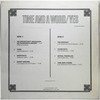
Yes – Time and a Word (1970) [Russian Vinyl]

Year: 1970 (LP 1991)
Label: Russian Disc Records (Russia), R60 00507
Style: Symphonic Rock, Art Rock
Country: London, England
Time: 40:05
Format: Flac Tracks 16/44,1 kHz
Size: 241 Mb

"Time and a Word" is the second studio album by English rock band Yes, released on 24 July 1970 by Atlantic Records. It was put together several months after the release of the band's 1969 eponymous debut, during which they continued to tour heavily and recorded Time and a Word during gaps between shows. Yes continued to follow their early musical direction of performing original material and cover versions of songs by pop, jazz, and folk artists. A small orchestra of brass and string session musicians was used on most of the album's songs.
Guitarist Peter Banks did not support the idea of adding an orchestra to the album, resulting in increased tensions between himself and the rest of the group. During their UK tour in April 1970 and before the album's release, Banks was fired from Yes and was replaced by Steve Howe. The UK album cover was considered inappropriate for the American market, so a new photograph of the band was used, putting Howe on the cover of an album on which he did not appear.
Time and a Word received mixed reviews from critics, but became the band's first release to enter the UK Albums Chart, peaking at number 45; however, it did not chart in the United States. In 2003, the album was remastered with several previously unreleased tracks.
(en.wikipedia.org)

01. A1 No Opportunity Necessary, No Experience Needed (04:44)
02. A2 Then (05:42)
03. A3 Everydays (06:09)
04. A4 Sweet Dreams (04:12)
05. B1 The Prophet (06:45)
06. B2 Clear Days (02:09)
07. B3 Astral Traveller (05:54)
08. B4 Time And A Word (04:27)

imagebam.com imagebam.com imagebam.com imagebam.com

KatFile
TurboBit
PixelDrain
UploadRar
Mega4up
Tuesday, April 7, 2020

The Nice - The Nice (1969) (Vinyl)

Year: 1969 (LP 1969)
Label: Immediate Records (Germany), 1C 062-90 524
Style: Symphonic Rock, Progressive Rock, Art Rock
Country: London, England
Time: 43:33
Format: Flac Tracks 16/44,1 kHz
Size: 262 Mb

Nice was the third album by the Nice; it was titled Everything As Nice As Mother Makes It in the US after Immediate broke their distribution deal with Columbia. Nice had been initially released in the US with a slightly longer version of Rondo 69 not available on the UK or on the independently-distributed US versions. The first US version of Nice was briefly reissued in 1973 by Columbia Special Products.
Continuing the Nice's fusion of jazz, blues, and rock, this album consists of studio (1–4) and live (5–6) tracks, the latter having become firm favourites in the band's live performances.
The album reached number 3 in the UK Album charts.
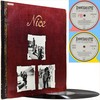
The UK version of the album came in a gatefold sleeve, showing photographs of the band relaxing at an unknown location, the interior of which featured handwritten notes by Keith Emerson.
Azrael was the first thing I wrote with Lee – now revisited it relates to the Angel of Death. The 5/4 riff revolves round in a circular motion rather like the birth, life & death cycle, and proves to be an interesting medium to improvise in. The verses are taken in common time (4/4). The quote from Rachmaninoff's Prelude (in) C# Minor is intentional as when it was written. Rachmaninoff had Edgar Allan Poe's vision of a man coming back to life in the coffin after burial.
For the number I detuned the strings on the piano slightly to give it a "honky-tonk" effect which helped in creating an air of something ageing. I'd like to apologise to Amen Corner for not retuning the piano afterwards. They had to use the same piano after our session, unfortunately they didn't need a "Winifred Atwell's Other Piano" sound.
"Azrael" had been the B-side of the Nice's first UK single release, "Thoughts of Emerlist Davjack". As well as the Rachmaninoff quotation, the track relied on Lennie Tristano's Turkish Mambo. The album version is lighter in tone than the original, and taken at a slightly faster pace, but retains the menace of the original.
On Hang on to a Dream we have Duncan Browne to thank for the choir.
At one of our London Concerts I had the pleasure of performing Lalo's Symphonie Espaniol (sic) with violinist John Mayer who also leads Indo-Jazz Fusions. We all thought the main riff too good to be forgotten after (a) one performance and set about giving it a new treatment. The words were written on a very dull journey from Newcastle to Birmingham and it became "Diary of an Empty Day".
People often ask us "why don't you play Blues". The Blues to us is a Universal language. Musicians from different speaking countries on first meeting will know exactly where they are on the basic blues structure. Brian, Lee and I have all been through this grounding and have said what we wanted to say in the blues for the time being through other groups. At rehearsals we'll usually warm up with a twelve bar. That's how the opening of "For Example" happened. However we didn't leave it there. The B minor blues moves into its relative major of D for the main theme then back again. The movement in E which follows is rather Hendrix-inspired after which the original D major theme is given a "Gregorian" feel and a 6/8 jazz waltz treatment in F. It is as the title says an Example.
The track added jazz players (including Joe Newman and Pepper Adams) with musical figures reminiscent of the work of Oliver Nelson as well as a section inspired by Gregorian chant and fleeting references to the Beatles' "Norwegian Wood".
Side 2 (tracks 5 & 6) was recorded on our first live appearance in New York at Fillmore East. Here we have Rondo '69. After the performance an urgent telegram was sent back to England- "please send more trousers".
She once belonged to Bob Dylan. She now belongs to you, me and anyone else who cares to listen. Keith Emerson.
Quotes of the theme to the film The Magnificent Seven can also be heard.
The live version of "Rondo" was also performed by Emerson, Lake & Palmer at the Isle of Wight Festival in 1970.
(en.wikipedia.org)

Keith Emerson – keyboards
Lee Jackson – bass guitar, vocals
Brian Davison – drums

Matrix Side A: 1C062-90524-A-1, Matrix Side B: 1C062-90524-B-1

01. A1 Azrael Revisited (05:51)
02. A2 Hang On To A Dream (04:47)
03. A3 Diary Of An Empty Day (03:57)
04. A4 For Example (08:49)
05. B1 Rondo (07:54)
06. B2 She Belongs To Me (12:12)

imagebam.com imagebam.com imagebam.com imagebam.com imagebam.com

KatFile
TurboBit
PixelDrain
UploadRar
Mega4up
Monday, April 6, 2020

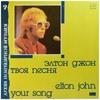
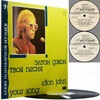
Elton John - Your Song (Compilation) (1988) (Vinyl)

Year: 1988 (1969-1971)
Label: Melodia Records (Russia), C10 26031 002
Style: Rock, Piano Rock
Country: 25 March 1947, Pinner, Middlesex, England
Time: 43:01
Format: Flac Tracks 16/44,1 kHz
Size: 255 Mb

Born: March 25, 1947.
Pinner, Middlesex, England.
English singer, songwriter, and humanitarian.
Once famous for his flashy clothes and string of hit records, English rock musician Elton John has more recently become a humanitarian (one who works to promote human welfare) with a particular interest in supporting acquired immune deficiency syndrome (AIDS; a disease that destroys the body's ability to fight infection) charities.
Early life:
Elton John was born Reginald Kenneth Dwight on March 25, 1947, in the town of Pinner in Middlesex, England. An only child who was overweight and wore glasses, he was afraid of his father, a squadron leader (a ranking officer) with the Royal Air Force, whom he described as "very snobbish and sort of stiff." His mother Sheila, on the other hand, brought home records that introduced him to rock music. John taught himself to play the piano at the age of four. He studied at the London Academy of Music but quit two weeks before graduation to pursue a musical career. He worked for a music publishing company and also played the piano in bars, later joining a band called Bluesology. He created his stage name as a combination of the middle name of Bluesology's singer, Long John Baldry, and the first name of the saxophone player, Elton Dean. Later in his life, John added the middle name Hercules.
Recording career begins:
In 1968 John met Bernie Taupin (1950–), who became his long-term song-writing partner. John's first album, Empty Sky (1969), was a commercial failure. His second album contained "Your Song," a hit in both the United States and England. In 1972 "Rocket Man" became his first number-one single in America. Other hits followed, including "Daniel" and "Crocodile Rock" from the album Don't Shoot Me, I'm Only the Piano Player. The album Goodbye Yellow Brick Road (1973) contained "Candle in the Wind," written about actress Marilyn Monroe (1926–1962). That same year, John launched his own record label, Rocket Records.
John became famous for his oversize glasses and outrageous outfits. He was called the "Queen Mum of Pop." He also enjoyed many expensive cars, large homes, and shopping sprees. In 1975 he starred as the Pinball Wizard in the film version of the rock opera Tommy. In 1976 a duet with Kiki Dee, "Don't Go Breaking My Heart," became his first British number-one single. His popularity then began to decline after a series of less successful albums. Admitting that he was attracted to both men and women further damaged his popularity, and he began abusing alcohol and drugs.
Although John continued performing during the 1980s, his drug and drinking problems had caused him to lose his magic touch. While recording Too Low for Zero in 1983, John met Renate Blauel, a German-born, recording-studio worker. They were married on Valentine's Day (February 14) 1984. The British press attacked both the marriage and John, focusing on his sexual history. After less than five years, the couple agreed to divorce.
Decides to help others:
In the early 1990s John received treatment for alcoholism, drug abuse, and bulimia (an eating disorder). He admitted he was a homosexual (a man attracted to other men) and began to devote his energies toward helping others. Starting in 1990 he donated all of the profits from the sales of his singles to charity, mostly those associated with AIDS. In 1992 he established the Elton John AIDS Foundation. In 1994 he was elected to the Rock and Roll Hall of Fame, and in 1995 he won an Academy Award.
In 1997 John was shaken by the death of his friend, Diana, Princess of Wales (1961–1997), in a car accident. John performed a new version of "Candle in the Wind" at her funeral. It sold more than thirty million copies after being released as a sigle. John donated all of the profits (more than $47 million) to the charity established in Diana's name. He was knighted by Queen Elizabeth II (1926–) for his achievements in music and contributions to charity.
Honors and awards:
In 2000 the National Academy of Recording Arts and Sciences honored John as Person of the Year for his charity work. Later that year, John and lyric writer Tim Rice wrote songs for the Broadway musical Aida (which won a Tony award) and the film The Road to El Dorado. John also sued the accounting firm (a company paid to verify and calculate business dealings) PriceWaterhouseCoopers and his former manager for $29 million, claiming they had stolen money from him.
John won a Grammy Award for best musical show album for Elton John and Tim Rice's Aida in February 2001. At the award show he performed with rap artist Eminem (1972–), angering homosexual rights leaders who had criticized Eminem for his antigay lyrics. Later that year John released Songs from the West Coast, which many praised as a return to his "1970s sound."
(www.notablebiographies.com)

01. A1 Your Song (04:03)
02. A2 Son Of Your Father (03:51)
03. A3 Where To Now, St Peter (04:15)
04. A4 Talking Old Soldiers (04:09)
05. A5 Ballad Of A Well-Known Gun (04:57)
06. B1 Border Song (03:24)
07. B2 Tiny Dancer (06:20)
08. B3 Country Comfort (05:10)
09. B4 Amoreena (05:00)
10. B5 Good-Bye (01:48)

imagebam.com imagebam.com imagebam.com imagebam.com imagebam.com

Mega4up

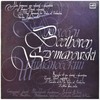
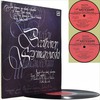
Repin and Bron - Beethoven and Szymanowski (1986) (Vinyl)

Year: 1986
Label: Melodia Records (Russia), C10 24143 000
Style: Classical
Country: Russia
Time: 40:43
Format: Flac Tracks 16/44,1 kHz
Size: 226 Mb

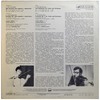
This record presents two violinists — a teacher and a pupil — Zakhar Bron and Vadim Repin. Both are winners of international competitions — Z. Bron of the Queen Elizabeth in Brussels (1971) and Wieniawski in Poznan (1977). In 1982 the 11-year-old Vadik Repin came first at the Wieniawski Young Violinists' Competition in Lublin. Polish newspapers wrote: "Talent! Only this can account for the fact that this plump vivacious boy played Wieniawski's virtuosic work with such amazing ease." Yes, it is the only explanation if talent also means the boy’s tremendous capacity for hard work. He plays "at the level of the best adult standards" and studies without any allowances for his age. The young musician's talent is also the talent of his teacher.
Vadim Repin is not the only prize winner in the class of Z. Bron, the RSFSR Merited Worker in the Arts, assistant professor of the Novosibirsk Conservatoire. Among his pupils there are winners of All-Russia, All-Union and international competitions. One of them is young Maxim Vengerov who in 1985 also won the first prize at the International Competition in Lublin.
Zakhar Bron is a concert musician. Soviet and foreign press have praised him for his virtuosic technique, classical phrasing, his expressive bowing, a fusion of the emotional and intellectual. For his performance of Szymanowski's concerto at the Wieniawski Competition Bron was awarded a special prize of Poland's Union of Composers.
In Poland he regularly participates in a seminar on violin playing and methods of its teaching for young performers from different countries. Bron is a pupil of I. D. Oistrakh who in his turn studied under his father D. F. Oistrakh. That's why Vadim Repin is often called David Oistrakh's "great grandson".
Forestalling sceptical remarks Z. Bron once said: "I cannot predict what'll happen to Vadik Repin in 10 years. I’m a teacher, and my task is to demand progress from my pupil in accordance with his age."
Repin is a student of the secondary special music school at the Novosibirsk Conservatoire. He has now in his repertoire concertos by Mozart, Tchaikovsky, Khrennikov, Khachaturian, Poem for Violin and Orchestra by E. Svetlanov, works by Paganini, Bach, Beethoven, Schumann, Ysaye. His appearances at home and abroad are a great success with the audiences and the critics. However, what is particularly important for Repin's teacher is that the boy's prodigious talents continue to grow and expand. As to Repin's musicianship T. Khrennikov had this to say: "I find only one definition — tremendous talent. Playing the violin for him is a source of happiness and joy of creation."
T. Shir

01. A1 Two Romances For Violin And Orchestra (No 1 in G Major Op40) (07:17) (Beethoven - Vadim Repin)
02. A2 Two Romances For Violin And Orchestra (No 2 in F Major Op50) (09:41) (Beethoven - Vadim Repin)
03. B1 Concerto No 1 For Violin And Orchestra (In A Minor Op35) (23:44) (Szymanowski - Zakhar Bron)

imagebam.com imagebam.com imagebam.com imagebam.com

KatFile
TurboBit
PixelDrain
UploadRar
Mega4up
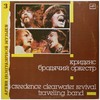
Creedence Clearwater Revival - Traveling Band (1988) (Compilation) (Vinyl)

Year: 1988
Label: Melodia Records (Russia), C 60 27093 009
Style: Rock, Country Rock
Country: El Cerrito, California, U.S.
Time: 38:00
Format: Flac Tracks 16/44,1 kHz
Size: 254 Mb

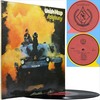
Although generally bracketed with the post-psychedelic wave of San Franciscan groups, Creedence Clearwater Revival boasted one of the region’s longest pedigrees. John Fogerty (28 May 1945, Berkeley, California, USA; lead guitar/vocals), Tom Fogerty (b. 9 November 1941, Berkeley, California, USA, d. 6 September 1990, Scottsdale, Arizona, USA; rhythm guitar/vocals), Stu Cook (b. 25 April 1945, Oakland, California, USA; bass) and Doug Clifford (b. 24 April 1945, Palo Alto, California, USA; drums) began performing together in 1959 while attending high school. Initially known as the Blue Velvets, then Tommy Fogerty And The Blue Velvets, the quartet became a popular attraction in the Bay Area suburb of El Cerrito and as such completed several singles for the local independent Orchestra. In 1964 they auditioned for the more prestigious Fantasy Records, who signed them on the understanding that they change their name to the more topical Golliwogs to monopolize on the concurrent ‘British Invasion’. Between 1965 and 1967, the rechristened unit recorded seven singles, ranging from the Beatles -influenced ‘Don’t Tell Me No More Lies’ to the compulsive ‘Fight Fire’ and ‘Walk Upon The Water’, two superb garage band classics.
The quartet turned fully professional in December 1967 and in doing so became known as Creedence Clearwater Revival (Creedence for an acquaintance Credence Nuball and because of its connotations of integrity; Clearwater from a beer commercial and because of its environmental overtones; and Revival to signify a change in fortunes). Their debut album reflected a musical crossroads. Revamped Golliwogs tracks and new John Fogerty originals slotted alongside several rock ‘n’ roll standards, including ‘Suzie-Q’ and ‘I Put A Spell On You’, the former reaching number 11 in the US charts. Bayou Country, issued within a matter of months at the beginning of 1969, was a more substantial affair, establishing Fogerty as a perceptive composer, and the band as America’s consummate purveyors of late 60s pop. ‘Proud Mary’ reached the Top 10 in both the US and UK and in the process become the quartet’s first gold disc. More importantly, it introduced the mixture of Southern Creole styles, R&B and rockabilly through which the best of the band’s work was filtered.
Creedence Clearwater Revival’s second album release of 1969, Green River, consolidated their new-found status and contained two highly successful singles, ‘Green River’ and ‘Bad Moon Rising’, the latter of which topped the UK charts. The set confirmed Fogerty’s increasingly fertile lyricism which ranged from personal melancholia (‘Lodi’) to a plea for mutual understanding (‘Wrote A Song For Everyone’). This social perspective flourished on ‘Fortunate Son’, an acerbic attack on a privileged class sending others out to war, one of several highlights captured on the band’s third album release of 1969, Willy And The Poor Boys. By this point Creedence Clearwater Revival was indisputably America’s leading attraction, marrying commercial success with critical approbation. ‘Down On The Corner’, a euphoric tribute to popular music, became their fourth US Top 10 single and confirmed a transformation from gutsy bar band to international luminaries.
Creedence Clearwater Revival reached a commercial peak with July 1970’s Cosmo’s Factory. The album included three gold singles, ‘Travelin’ Band’, ‘Up Around The Bend’ and ‘Lookin’ Out My Back Door’, as well as an elongated reading of the Tamla/ Motown Records classic ‘I Heard It Through The Grapevine’. The album defined the consummate Creedence Clearwater Revival sound: tight, economical and reliant on an implicit mutual understanding, and deservedly became the year’s bestselling set. However, relationships between the Fogerty brothers grew increasingly strained, reflected in the standard of the disappointing Pendulum. Although it featured their eighth gold single in ‘Have You Ever Seen The Rain’, the set lacked the overall intensity of its immediate predecessors, a sparkle only occasionally rekindled in ‘Pagan Baby’ and ‘Molina’.
Tom Fogerty left for a solo career in February 1971, but although the remaining members continued to work as a trio, the band had lost much of its impetus. Major tours of the USA, Europe, Australia and Japan did ensue, but a seventh collection, Mardi Gras, revealed an artistic impasse. Cook and Clifford were granted democratic rights, but their uninspired compositions only proved how much the band owed to John Fogerty’s vision. Creedence Clearwater Revival was officially disbanded in October 1972. It was a dispiriting close to one of the era’s most compulsive and successful acts, a combination rarely found.
The rhythm section followed low-key pursuits both independently and together, with Cook enjoying most success in the late 80s as a member of Southern Pacific. Their erstwhile leader began an erratic path dogged by legal and contractual disputes, although he deservedly re-emerged in 1985 with the American chart-topper Centrefield. Tom Fogerty left the music business in the early 80s to work in real estate, but died in 1990 from tuberculosis. In 1993, Creedence Clearwater Revival were inducted into the Rock And Roll Hall Of Fame, although the animosity between Fogerty, Clifford and Cook was clearly evident. The dispute flared up again in 1998 when Clifford and Cook began touring as Creedence Clearwater Revisited, with former Cars guitarist Elliot Easton and vocalist John Tristano included in the line-up. A live album was issued as John Fogerty attempted to stop Clifford and Cook from using the Creedence name.
(Source: The Encyclopedia of Popular Music by Colin Larkin. Licensed from Muze.)

01. A1 Down On The Corner (02:46)
02. A2 Cotton Fields (02:57)
03. A3 Fortunate Son (02:20)
04. A4 Who'll Stop The Rain (02:30)
05. A5 Up Around The Bend (02:44)
06. A6 My Baby Left Me (02:19)
07. A7 As Long As I can See The Light (03:29)
08. B1 Travelin Band (02:09)
09. B2 Lookin Out My Back Door (02:36)
10. B3 Run Through The Jungle (03:06)
11. B4 I Heard It Through The Grapevine (10:59)

imagebam.com imagebam.com imagebam.com imagebam.com

KatFile
TurboBit
PixelDrain
UploadRar
Mega4up
Saturday, April 4, 2020

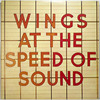
Wings Paul McCartney - Wings at the Speed of Sound (1976) (Vinyl)

Year: 1976 (LP 1976)
Label: MPL Records (UK), PAS 10010, OC 064 97581
Style: Classic Rock
Country: England
Time: 46:57
Format: Flac Tracks 16/44,1 kHz
Size: 269 Mb

Wings at the Speed of Sound is the fifth studio album by the British–American rock band Wings, released on 25 March 1976 as a follow-up to their previous album Venus and Mars. Issued at the height of the band's popularity, it reached the top spot on the US album chart and peaked at number 2 on the UK album chart. Both singles from the album also reached the top 5 of the UK and US singles charts, with 'Silly Love Songs' reaching number 1 in the US.
The album was recorded and released in the midst of Wings' highly successful Wings Over the World tour, with songs from the album performed on the tour after its release. Subsequently, performances of "Let 'Em In", "Time to Hide", 'Silly Love Songs' and "Beware My Love" were included on the live album Wings over America, released in December 1976. The album, after the 2010 CD version, was again remastered in 2014 with further improved audio quality.
As a reaction to critics who believed Wings was merely a vehicle for Paul McCartney, the album featured every member of the band taking lead vocals on at least one song, and two songs from the album are written or co-written by band members other than the McCartneys.
After a series of concerts in Australia in November 1975, Wings took a break from the tour to spend the holidays with their families and in January 1976 booked time at Abbey Road Studios in London to record Wings at the Speed of Sound. It was the first time McCartney had fully recorded an album in England since Red Rose Speedway. Because of the tour commitments, Wings were not afforded the opportunity to record in another locale. By the end of February, the album was complete, and Wings went back on the road.
Around the time of the studio sessions for Wings at the Speed of Sound, McCartney was facing criticism for Wings simply being a vehicle for himself. He encouraged each of the band members to contribute a song during the sessions, though this would become one of the reasons for the criticism of the album. McCartney had previously attempted to create a democratic album in Red Rose Speedway, though it would be rejected by his record label.
Engineer Peter Henderson later commented, "I remember one of my first engineering jobs, working with Paul McCartney on Wings at the Speed of Sound — he'd do two vocal takes and ask, 'Which is the better one?' And when he played guitar, he'd really lean into it and give it everything he got." Two tracks ("The Note You Never Wrote" and "Warm and Beautiful") were arranged by Fiachra Trench.
The album was recorded at Abbey Road in two different sessions: first sessions took place in August/September and October 1975, with work resuming in January–February 1976. During the playback of "Must Do Something About It", Paul heard drummer Joe English sing the song and decided to have him take the lead vocal. In "Cook of the House", McCartney handled double-bass, while "Silly Love Songs" was arranged in a disco-style, in a similar fashion to Al Green's "Sha La La".
(en.wikipedia.org)

01. A1 Let 'Em In (05:12)
02. A2 The Note You Never Wrote (04:23)
03. A3 She's My Baby (03:09)
04. A4 Beware My Love (06:30)
05. A5 Wino Junko (05:21)
06. B1 Silly Love Songs (05:56)
07. B2 Cook of the House (02:40)
08. B3 Time to Hide (04:32)
09. B4 Must Do Something About It (03:45)
10. B5 San Ferry Anne (02:09)
11. B6 Warm and Beautiful (03:14)

imagebam.com imagebam.com imagebam.com imagebam.com imagebam.com imagebam.com

KatFile
TurboBit
PixelDrain
UploadRar
Mega4up

Thursday, April 2, 2020

Various Artists - Zabriskie Point (Soundtrack) (1970) (Vinyl)

Year: 1970 (LP 1970)
Label: MGM Records (UK), 2315 002
Style: Rock, Psychedelia
Country: UK, USA
Time: 36:47
Format: Flac Tracks 16/44,1
Size: 203 Mb

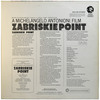
All three major American counterculture movies of the late sixties benefitted from the new vogue for rock soundtracks. The Strawberry Statement mixed purpose-written orchestral themes with mostly familiar numbers by CS&N and Neil Young, plus the predictable but appropriate “Something In The Air” and “Give Peace A Chance”. Easy Rider thrummed along to a more eclectic but still fitting selection from Dennis Hopper’s record collection: Steppenwolf, Hendrix, the Byrds and stoned oddities from the Holy Modal Rounders and the Electric Prunes. But maverick director Michelangelo Antonioni’s choices for Zabriskie Point are more enigmatic, and the story of their choosing more bewildering.
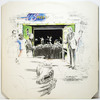
The film itself, part wilfully perverse take on the late sixties student unrest, part classic road movie and part soft-porn skinflick, has been analysed to death; you either love it or hate it. The soundtrack album by contrast has received few reviews and deserves examination in these pages. The story goes that Antonioni commissioned the then “hot” acts Pink Floyd, John Fahey and Kaleidoscope (US) to create new music for various scenes in the film including the notorious desert love scene, which they duly did, and then summarily rejected almost all of this when delivered, instead delving into the back catalogues of these acts and others. (According to legend, the spurned Fahey was so affronted he “decked” the director forthwith.) The lengthy, dusty love scene was eventually orchestrated by Jerry Garcia’s solo guitar improvisations, and even then Antonioni insisted on a fussy edit compiled from four different improvs for the final seven-minute opus.
Perhaps the oddest thing is that despite all these creative shenanigans the soundtrack still works, both in the movie and as a long-player. Floyd’s opening “Heart Beat, Pig Meat” is an organ-driven sound collage that contains enough menace to convey the tension as the students discuss the upcoming strike, and their soft, Byrdsy “Crumbling Land” provides a fleeting but apt background to the start of Daria’s desert odyssey in the Buick though, as Dave Gilmour admitted, it “could have been done better by any number of American bands”. A brief spiralling segment of the Dead’s live “Dark Star” accompanies Mark’s liftoff of the stolen Cessna from the airfield at LA, while Fahey’s “Dance Of Death”, which is somewhat discordant but isn’t actually very morbid, plays after Daria hears over the radio of Mark’s gunning-down by the cops on his return to the airfield. Patti Page’s venerable “Tennessee Waltz” is an inspired choice for the old rednecks in the desert truckstop (and would cost Antonioni a small fortune to licence from the State, which owned the copyright). Garcia’s sweet, restrained playing provides a genuinely sensitive background to the balletically-choreographed desert orgy. And of course the explosive climax is tailor-made for Floyd’s climactic “Careful With That Axe, Eugene”, which appears in a re-recording unfortunately inferior to the wonderful original single B-side and with the alternative title “Come In Number 51, Your Time’s Up”. The two Kaleidoscope tunes “Brother Mary” and “Mickey’s Tune”, Roscoe Holcombe’s down-home “I Wish I Was A Single Girl Again” and the Youngbloods’ “Sugar Babe” are all excellent, delightfully obscure country rock items which accompany various highway scenes out in the Mojave.
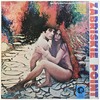
The movie also featured Keith Richards’s bluesy “You Got The Silver”, which for licensing reasons never appeared on the OST album, and Roy Orbison’s splendid but inappropriate “So Young” which played over the closing titles and was allegedly added at post-production without Antonioni’s permission, and is hence with some justification also omitted. The 2-CD Sony reissue offers on its first disc all the other soundtrack tunes in complete form apart from the truncated “Dark Star”, and on the other the four complete Garcia improvs and four pieces of the rejected Floyd material, most of which are interesting enough but sound rather raw and unfinished, presumably not having being polished up for the final takes, and hence really for Floyd completists only. The CD booklet offers as cover picture a bizarre solarised still of the film’s two principals au naturel and a really excellent essay on the soundtrack by David Fricke.
(Written by Len, March 23rd, 2011, therisingstorm.net)

01. A1 Heart Beat, Pig Meat (Pink Floyd) (03:14)
02. A2 Brother Mary (Kaleidoscope) (02:41)
03. A3 Excerpt from Dark Star (Grateful Dead) (02:37)
04. A4 Crumbling Land (Pink Floyd) (04:17)
05. A5 Tennessee Waltz (Patti Page) (03:07)
06. A6 Sugar Babe (The Youngbloods) (02:14)
07. B1 Love Scene (Jerry Garcia - Grateful Dead) (07:06)
08. B2 I Wish I Was a Single Girl Again (Roscoe Holcomb) (01:57)
09. B3 Mickey's Tune (Kaleidoscope) (01:43)
10. B4 Dance of Death (John Fahey) (02:43)
11. B5 Come in Number 51, Your Time Is Up (Pink Floyd) (05:03)
imagebam.com imagebam.com imagebam.com imagebam.com

KatFile
TurboBit
PixelDrain
UploadRar
Mega4up