Friday, April 11, 2025

Poco - Pickin' Up The Pieces (1969)

Year: May 19, 1969 (CD )
Label: Audio Fidelity (US), AFZ 158
Style: Country Rock, Folk Rock, Soft Rock
Country: Los Angeles, California, U.S.
Time: 40:09
Format: Flac Tracks 16/44,1 kHz
Size: 262 Mb

Pickin' Up the Pieces is the debut album by country rock band Poco, released in 1969. It was one of the earliest examples of the emerging genre of country rock. Several of the songs date back to Richie Furay's days in Buffalo Springfield. An early version of "What a Day" was included on the Buffalo Springfield box set in 2001.
Bassist Randy Meisner appears on the album but quit the band shortly before the record was released. Meisner's exit was the result of his anger from being excluded (at Furay's insistence) from participation in the final mix playback sessions for the album, as only Messina and Furay were to complete production. His image was removed from the painting on the cover and replaced with the dog seen at the far left. His bass parts and backing vocals were left in the mix, but his lead vocals were removed, and new versions were sung by George Grantham. He is not credited as a group member on the completed album, but is listed in the credits as providing "supporting vocals and bass".
In his Allmusic review, music critic Bruce Eder called the album a "startlingly great record, as accomplished as any of Buffalo Springfield's releases, and also reminiscent of the Beatles and the Byrds... The mix of good-time songs, fast-paced instrumentals, and overall rosy feelings makes this a great introduction to the band, as well as a landmark in country-rock only slightly less important (but arguably more enjoyable than) Sweetheart of the Rodeo." Robert Christgau wrote; "Nice and happy, but considering the personnel a disappointment."
(en.wikipedia.org/wiki/Pickin%27_Up_the_Pieces_(Poco_album))

01. Foreward (00:50)
02. What a Day (02:30)
03. Nobody's Fool (03:28)
04. Calico Lady (03:03)
05. First Love (03:10)
06. Make Me a Smile (03:20)
07. Short Changed (03:24)
08. Pickin' Up the Pieces (03:19)
09. Grand Junction (03:00)
10. Oh Yeah (04:09)
11. Just in Case It Happens, Yes Indeed (02:48)
12. Tomorrow (03:13)
13. Consequently, So Long (03:49)
Poco69-Pickin-Up-The-Pieces-AF-01 Poco69-Pickin-Up-The-Pieces-AF-02 Poco69-Pickin-Up-The-Pieces-AF-03

FilesPayout    FilePv    KatFile

All my files:     KatFile

Talking Heads - Naked (1988)

Year: 1988 (CD 1988)
Label: Sire Records / Fly Records (USA), 9 25654-2
Style: New Wave, Post-Punk, Art-Pop, Avant-Funk
Country: New York City, New York, U.S.
Time: 52:46
Format: Flac Tracks 16/44,1 kHz
Size: 322 Mb


Charts: US #19, AUS #8, AUT #8, CAN #13, NLD #13, NOR #7, NZ #7, SWE #9, SWI #6, UK #3. US & UK: Gold.
Naked is the eighth and final studio album by American rock band Talking Heads, released on March 15, 1988, by Sire Records. Following the more straightforward new wave and pop rock sound on Little Creatures (1985) and True Stories (1986), Naked marked a return to the worldbeat stylings of both Remain in Light (1980) and Speaking in Tongues (1983), blending elements of Afrobeat, Latin funk, and art pop. The album's songs were formed from improvisational jam sessions recorded in Paris, which featured the participation of numerous guest musicians such as former Smiths guitarist Johnny Marr and singer Kirsty MacColl. Lyrics and vocals were then added in New York City following the Paris recordings.
Naked was positively received by critics, who viewed it as a return to form for the band following the mixed responses to True Stories; retrospective assessments, however, have been more lukewarm. The album was also a moderate commercial success, peaking at No. 19 on the US Billboard 200 and No. 3 on the UK Albums Chart, later being certified gold by both the RIAA and BPI. Following the album's release, Talking Heads officially went on hiatus, with its members focusing on various side-projects over the course of the next few years; frontman David Byrne would eventually announce in December 1991 that the band had dissolved.
(en.wikipedia.org/wiki/Naked_(Talking_Heads_album))


David Byrne
vocals, guitar, keyboards, toy piano, slide guitar
Jerry Harrison
piano, keyboards, guitar, slide guitar, tambourine, backing vocals
Chris Frantz
drums, keyboard percussion
Tina Weymouth
bass, keyboards, organ, backing vocals

01. Blind (04:59)
02. Mr. Jones (04:20)
03. Totally Nude (04:11)
04. Ruby Dear (03:50)
05. (Nothing but) Flowers (05:35)
06. The Democratic Circus (05:04)
07. The Facts of Life (06:28)
08. Mommy Daddy You and I (03:58)
09. Big Daddy (05:38)
10. Bill (03:22)
11. Cool Water (05:16)


All my files:     KatFile

Audience - The House On The Hill [3 bonus tracks] (1971)

Year: May 1971 (CD 2015)
Label: Esoteric Recordings (Europe), ECLEC 2492
Style: Art Rock, Progressive Rock
Country: United Kingdom
Time: 51:16
Format: Flac Tracks 16/44,1 kHz
Size: 318 Mb

The House on the Hill is Audience's strongest effort, made up of simple, elegantly arranged songs, focusing around Howard Werth's "electric classical" guitar and Keith Gemmel's tenor sax and clarinet. "Jackdaw" has Werth showing off his vocal range by hollering out the chorus in full force. "Raviole" is an instrumental piece painted with lovely acoustic guitar and is one of the real gems on the album. There's not a lot of meat on each of the songs, but the use of flute and vibraphone give this album a unique feel and is deemed interesting mainly for that purpose. The overall atmosphere is quite comfortable, and the hypnotizing effect aroused from the woodwind instruments creates an absorbing mood one might not expect to find here. Snippets of jazz fusion make up the title track, overlapped with some rich saxophone playing. After a few listens, this band slowly rises from being heard to being enjoyable.
(allmusic.com/album/the-house-on-the-hill-mw0000264078)

01. Jackdraw (07:30)
02. You're Not Smiling (05:21)
03. I Had a Dream (04:18)
04. Raviole (03:41)
05. Nancy (04:15)
06. Eye to Eye (02:32)
07. I Put a Spell on You (04:09)
08. House on the Hill (07:32)
09. You're Not Smiling (Single Mix) (04:18)
10. Indian Summer (Single Edition) (03:17)
11. You're Not Smiling (Promotional Radio Version) (04:17)

FilesPayout    FilePv    KatFile

All my files:     KatFile

Free - Live At The BBC [2CD] 2006

Year: 1969-1971 (CD 2006)
Label: Universal Records, Island Records (Europe), 9840662
Style: Blues, Blues Rock, Classic Rock
Country: London, England
Time: 69:46, 57:06
Format: Flac Tracks 16/44,1 kHz
Size: 399, 161 Mb


It was recorded between 1968 and 1971 on BBC on various occasions both "in session" and "in concert". All songs are credited to Andy Fraser and Paul Rodgers except "Trouble on Double Time" and "Mr. Big" by Paul Rodgers, Paul Kossoff, Andy Fraser, and Simon Kirke, "Waiting on You" by B. B. King and Freddie Washington, and "The Hunter" by Booker T. Jones, C. Wells, Al Jackson, Jr., Donald Dunn, and Steve Cropper.
(Wikipedia)

Paul Rodgers – vocals, piano
Paul Kossoff – lead guitar
Andy Fraser – bass guitar, backing vocals
Simon Kirke – drums

CD1
01. Waiting On You (02:16)
02. Sugar For Mr Morrision (03:43)
03. I'm A Mover (03:05)
04. Over The Green Hills (03:52)
05. Songs Of Yesterday (03:08)
06. Broad Daylight (03:19)
07. Woman (04:22)
08. I'll Be Creepin' (02:43)
09. Trouble On Double Time (03:51)
10. Mouthful Of Grass (04:41)
11. All Right Now (05:28)
12. Fire And Water (03:04)
13. Be My Friend (Take One) (06:05)
14. Be My Friend (Take Two) (05:36)
15. Ride On A Pony (Take One) (00:10)
16. Ride On A Pony (Take Two) (04:31)
17. Ride On A Pony (Take Three) (01:24)
18. Ride On A Pony (Take Four) (00:25)
19. Ride On A Pony (Take Five) (04:29)
20. Get Where I Belong (03:25)

CD2
01. The Hunter (05:23)
02. Woman (04:26)
03. Free Me (07:23)
04. Remember (04:48)
05. Fire And Water (03:58)
06. Be My Friend (05:00)
07. Ride On A Pony (04:35)
08. Mr Big (06:35)
09. Don't Say You Love Me (05:26)
10. Woman (04:17)
11. All Right Now (05:09)

CD1:    FilesPayout    FilePv    KatFile
 
CD2:    FilesPayout    FilePv    KatFile

All my files:     KatFile

Thursday, April 10, 2025

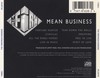
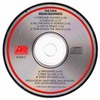
The Firm - Mean Business [Japanese Ed.] (1986)

Year: 3 February 1986 (CD 1986)
Label: Victor Company (Japan), 7 81628-2
Style: Hard Rock, Rock
Country: England
Time: 39:35
Format: Flac Tracks 16/44,1 kHz
Size: 249 Mb


After the big success of their eponymous 1985 debut, the super-group The Firm followed up with their sophmore release in early 1986 called Mean Business, which would end up being the short-lived super-group’s final album. At first listen, this album seems to be sub-par to the debut, or at least much more under-developed at best. But, upon each closer and subsequent listen, one discovers that this album is actually quite good and original in its own right.
Unfortunately, not many people have taken this closer listen and the album had a short ride to the proverbial dust bin. This was due, in part, to the actions taken by the band themselves as The Firm suddenly decided to call it quits just a few months after Mean Business was released, signifying their own apparent disapproval of this work.
Musically, the album is filled with spastic and rudimentary riff lines from Jimmy Page, odd but solid musical timings from the rhythm section of Tony Franklin and Chris Slade, and powerful, nearly strained vocal performance by Paul Rodgers. It is an uneven album, with heavy influence from Page here and heavy influence from Rodgers there, along with some experimental pieces by the band as a whole. There are a few songs that feel under-developed and a few that feel over-produced. But with every listen, they all seem to get better and better.
The album begins with the only survivor from the short-lived XYZ project. In 1981, following the death of drummer John Bonham and the disbandment of Led Zeppelin, Robert Plant and Jimmy Page decided to join forces with Chris Squire and Alan White, formally of Yes. The would-be super-group was to be called XYZ (for ex- Yes and Zeppelin), but fell apart within a year and yielded no recorded material. “Fortune Hunter” is a reworked song from that project, written by Page and Squire. Through the first three verses, the song displays many of the characteristics that will be found throughout this Firm album – a frenzied and frantic riff with strained vocals – but then it suddenly deviates sharply into a “quiet” middle section before quickly rebounding and building back to the fast pace.
To close the album, a near-opposite song “Spirit of Love” was chosen. Driven by Franklin’s piano riffs, this quasi-epic is probably the song that Page had the least influence on, as it is pure pop and even incorporates a full chorus towards the end, which makes one believe it was inspired by Foreigner’s “I Want to Know What Love Is”. The deviation between the opener and closer, while adding to the overall oddness of the album, also puts into context the diverse material in between.
“Cadillac”, with its slow, trance-like blues, fueled by the excessively long, droning guitars by Page, is one of the more interesting songs on the first side. The song is held together by the methodical rhythm of Franklin and Slade, and contains just enough skipping in time to make it quite interesting.
Paul Rodgers contributes the next two songs – the synth-driven pop song “All the King’s Horses”, which was ill-advisedly slated as the emphasis single from Mean Business, and the darker. message-driven “Live In Peace”. This latter song has a very Bad Company-ish vibe, with Page adding a nice guitar lead.
The second side contains, perhaps, the best three songs on the album. Tony Franklin contributes the jazzy “Dreaming”, a unique and off-beat, gem which contains some very surprising turns. The other, collaborations by Rodgers and Page, offer some insight of what could have been had this group stayed together a while longer. “Tear Down the Walls” is a good, catchy pop-rock song that could’ve (and should’ve) been a hit in 1986, while “Free to Live” contains another rudiment-driven riff, that is accented brilliantly by some excellent vocals.
While this may not quite rise to the level of The Firm’s 1985 debut (although a strong case may be made that it does), Mean Business is well worth the listen.
Part of Classic Rock Review’s celebration of the 25th anniversary of 1986 albums.
(Classic Rock ReviewPosted on May 11, 2011. www.classicrockreview.com)


01. Fortune Hunter (05:01)
02. Cadillac (05:56)
03. All The Kings Horses (03:18)
04. Live In Peace (05:06)
05. Tear Down The Walls (04:46)
06. Dreaming (06:02)
07. Free To Live (04:15)
08. Spirit Of Love (05:08)

imagebam.com imagebam.com imagebam.com imagebam.com


All my files:     KatFile

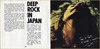
Deep Purple - Made In Japan (1972) [+Bonus CD]

Year: 15-17 August 1972 (CD 1998)
Label: Warner Bros. Records (USA), R2 75623
Style: Hard Rock (Live)
Country: Hertford, Hertfordshire, England
Time: 76:19, 21:45
Format: Flac Tracks 16/44,1 kHz
Size: 486, 168 Mb


Deep Purple have had a rough time gaining and retaining the status of being Kings of the Heavy Metal Set, and with the release of their last album, Who Do We Think We Are?, many critics rejected the fawnish fivesome for trying to step out of their league with electronic-cum-Yes gizmos and melodic lines or staying within the confines of their initial blockbuster, Deep Purple in Rock. If you’re expecting something new in terms of either approach or material from Made In Japan, you will be severely disappointed, but if you’re a diehard fan of the group and not too interested in any great diversification from their old style, Made In Japan is an assured treat. For Made In Japan is Purple’s definitive metal monster, a spark-filled execution of the typical Purple style.
Unlike Five Live Yardbirds or Humble Pie-Rocking the Fillmore, Deep Purple deems it unnecessary to play any new material on their live albums. The live versions of all the songs are played at a much quicker pace than they were in the studio. So when “Strange Kind of Woman” or “Lazy” comes over the radio, the average listener will be able to jump up and say, “How come they’re playing those Deep Purple records so fast?” only to be astounded when the Osaka audience’s applause appears at the end of the song. This album was originally intended to be released only in the United Kingdom, but when hundreds of thousands of copies of the import started selling in America at ten bucks a shot, Warners decided to get on the case and released it just a few months after Purple’s last LP.
As far as the artistic side of Made In Japan, Deep Purple have always been ace performers, rarely using any gimmicks other than their own volatile stage personalities. While Purple refuses to take themselves too seriously, all of the solos on Made In Japan are technically superior to most instrumental melodramatics one hears from supposedly more serious bands. Deep Purple is a tried-and-true Seventies group that has proven itself time and time again, a favorite of many a serious musician (for instance, the Strawbs’ Dave Cousins). While we still have to wait for their next release to know if they are going to continue at even keel, the fact is Made In Japan is here, it’s everything it should be and more, and Deep Purple can still cut the mustard in concert — so be it.
(By JOHN TIVEN. RollingStone magazine. MAY 24, 1973 4:00AM ET)


Ritchie Blackmore (born 14 April 1945) – lead guitar
Ian Gillan (born 19 August 1945) – vocals, harmonica (uncredited), percussion (uncredited)
Roger Glover (born 30 November 1945) – bass
Jon Lord (9 June 1941 – 16 July 2012) – organ, piano
Ian Paice (born 29 June 1948) – drums

01. Highway Star (06:43)
02. Child in Time (12:17)
03. Smoke on the Water (07:36)
04. The Mule (09:28)
05. Strange Kind of Woman (09:52)
06. Lazy (10:27)
07. Space Truckin' (19:54)

Bonus CD:
01. Black Night (06:17)
02. Speed King (07:24)
03. Lucille (08:03)

imagebam.com imagebam.com imagebam.com imagebam.com imagebam.com imagebam.com imagebam.com

CD1:    FilesPayout    FilePv    KatFile

CD2:    FilesPayout    FilePv    KatFile

All my files:     KatFile

Wednesday, April 9, 2025

Coverdale Page - Coverdale Page (1993)

Year: 18 March 1993, (CD 1993)
Label: Geffen Records (USA), GEFD-24487
Style: Hard Rock, Rock
Country: Middlesex, England (Page); Yorkshire, England (Coverdale)
Time: 61:14
Format: Flac Tracks 16/44,1 kHz
Size: 441 Mb


Coverdale/Page was a collaboration featuring former Led Zeppelin guitarist Jimmy Page and former Whitesnake and former Deep Purple lead vocalist David Coverdale. The union of these two seemed like an odd one when it started in 1991, as Page was considered a top-notch guitarist for all time and Coverdale had been criticized as being a knock-off (even rip-off) of Zeppelin’s vocalist Robert Plant. However, Coverdale’s commercial currency was riding high at the beginning of the nineties, due mainly to the recent commercial heights of Whitesnake while Page’s post-Zeppelin success had been sluggish in the 1980s, save for a brief run with The Firm.
Since Led Zeppelin disbanded after the death of John Bonham in 1980, rumors of a reunion were always present. By the early 1990s, these rumors had reached a fevered pitch and it appeared as though a reunion may finally come to fruition. However, Plant reportedly began to have reservations which ultimately nixed the plan. Because of this, many have suggested that Page collaborated with Coverdale in order to somewhat "irk" Plant, by collaborating with this "newer model" of the singer. It may have worked, as Plant expressed some derision at the guitarist’s collaboration with Coverdale in interviews at the time.
The project officially began with some low grade recordings by the Coverdale-Page duo in 1991. The album tracks for the eponymous album were then recorded in several studios on both sides of the Atlantic over the winter of 1991/92. However, the album itself was delayed in post production for over a year until it was finally released in March 1993.
"Shake My Tree" starts things off as a very Zeppelin-esque, super-charged blues rock anthem. The song builds tension through the first two verses as Page’s guitar and Coverdale’s voice carry the day until a the rest of the band come in with a "fire one" approach, making this a very formidable opener. The key riff for the song had actually been developed by Page during the sessions for Zeppelin’s final album In Through The Out Door, recorded in 1978. It was discarded then and even passed up by Page’s mid eighties group, The Firm. The Zeppelin-esque riffing of "Waiting on You" follows with some interesting stop/start rudiments, while the drumming and bass is definitely more Whitesnake than Led Zeppelin.
Speaking of Whitesnake, "Take Me for a Little While" could have fit well on any of their 1980s albums. A very moody power ballad, with just enough arrangement pizazz to keep it from the caricature realm of groups like Poison. "Pride and Joy" is a bit more original. Conceived by Coverdale as a Dr. John-style blues tune before Page brought it to a whole new level with layered guitars and a dulcimer added on top (an instrument Page hadn’t recorded since "That’s the Way" on Led Zeppelin III). During the second part of the song, Page plays a much stronger electric riff, which nicely counter-balances the song’s feel. "Shake My Tree" earned considerable radio airplay at the time.
Slower rock tracks also are prevalent on the album, such as the "Kashmir”-like "Over Now”, which sounds like some of the tracks from Page’s brief solo career. Former Montrose drummer Denny Carmassi leads a fast rock shuffle behind "Feeling Hot”, while bassist Jorge Casas adds some melodic and bouncy bass to "Easy Does It”. But there is no doubt that this album is dominated by the two men who give its name. "Take a Look at Yourself" is almost a love song, with measured, strummed guitars by Page, a very melodic vocal hook, and some fine wailing by Coverdale towards the end.
The album ends strong with two quality tracks. "Absolution Blues" is almost a hybrid between Pink Floyd and Deep Purple, with Page providing the fine yet vastly different guitar parts for both sides of the equation. "Whisper a Prayer for the Dying" closes with more strong acoustic guitars and bass before it rips into frenzied part with strong riffs and wailing vocals.
Despite alt-rock dominating the charts and radio at the time, Coverdale/Page initially sold strongly, peaking at #4 in the UK and #5 in the US and eventually going platinum. But the album did soon fade from view, a proposed tour was axed, and the partnership quickly dissolved after this one album. In the end, Coverdale re-formed Whitesnake and Page finally joined up Led Zeppelin front man Robert Plant in 1994 for a couple of new albums in the mid 1990s.
(www.classicrockreview.com. Classic Rock ReviewPosted on April 7, 2013)


01. Shake My Tree (04:53)
02. Waiting on You (05:16)
03. Take Me for a Little While (06:15)
04. Pride and Joy (03:31)
05. Over Now (05:23)
06. Feeling Hot (04:11)
07. Easy Does It (05:52)
08. Take a Look at Yourself (05:02)
09. Don't Leave Me This Way (07:53)
10. Absolution Blues (05:59)
11. Whisper a Prayer for the Dying (06:54)

imagebam.com imagebam.com imagebam.com imagebam.com imagebam.com


All my files:     KatFile

The Pentangle - The Pentangle [7 bonus tracks] (1968)

Year: 17 May 1968 (CD 2001)
Label: Sanctuary Records (UK), CMRCD131
Style: Folk Rock, Folk Baroque
Country: 1967–1973; 1981–present, United Kingdom
Time: 53:24
Format: Flac Tracks 16/44,1 kHz
Size: 308 Mb


The Pentangle was the 1968 debut album of the band Pentangle: Terry Cox, Bert Jansch, Jacqui McShee, John Renbourn and Danny Thompson. It brought together their separate influences of folk, jazz, blues, early music and contemporary songwriting. One of the band's most commercially successful albums, it reached number 21 in the British charts.

Background
By the time the album was produced, the members of Pentangle were already accomplished musicians, in their own fields, and had played together in various combinations. Jansch and Renbourn were recognised as solo artists and played together regularly, including their recording of the Bert And John album. McShee had sung folk and blues in pubs and clubs, and had recorded with Renbourn on Another Monday. Cox and Thompson were experienced session musicians and had played together in Alexis Korner's band.

Reception
Richie Unterberger said of the album "If it was more a folk-jazz-blues stew than it was folk-rock, it certainly rocked with a beat, and was executed with vocal harmonies, vocal and instrumental solo trade-offs, and a daring, irreverent spirit that immediately connected with rock-oriented listeners. And rock listeners, rather than folk ones, probably comprised the majority of the Pentangle's audience." In his Allmusic retrospective review, Ronnie D. Lankford wrote, "There's something exciting about the first album of a band that goes on to greatness, and The Pentangle, by the group of the same name, is no different. Here, the listener witnesses the first studio work of a band struggling to get their essence down on vinyl... Equally comfortable with traditional songs, instrumentals, and originals, they made few missteps on their early albums.
(en.wikipedia.org/wiki/The_Pentangle_(album))

01. Let No Man Steal Your Thyme (02:48)
02. Bells (04:02)
03. Hear My Call (03:08)
04. Pentangling (07:14)
05. Mirage (02:02)
06. Way Behind The Sun (03:11)
07. Bruton Town (05:20)
08. Waltz (05:06)
09. Koan [Alternate version] (02:10)
10. The Wheel [Alternate version] (02:00)
11. The Casbah [Alternate version] (02:17)
12. Bruton Town [Edit 1/5/3] (05:15)
13. Hear My Call [Alternate version] (03:18)
14. Way Behind The Sun [Alternate version] (02:49)
15. Way Behind The Sun [Instrumental] (02:37)

imagebam.com imagebam.com imagebam.com imagebam.com


All my files:     KatFile

Kayak - Merlin (1981)

Year: 1981 (CD 1994)
Label: Pseudonym Records (Netherlands), CDP 1017 DD
Style: Rock, Pop, Progressive Rock
Country: Netherlands (1972–1982, 1999–present)
Time: 45:59
Format: Flac Tracks 16/44,1 kHz
Size: 292 Mb


After two unabashed pop releases, this Kayak album marked a return to the progressive edge that was the foundation of the band's early success. Although this was the third release featuring lead vocalist Edward Reekers, who took over for Max Werner after Starlight Dancer, Merlin most closely resembles Kayak's pre-Reekers period. Considering the steadily declining quality exhibited on 1978's Phantom of the Night and 1980's Periscope Life, it was surprising that, amid the new wave craze, this band would return to its earlier form. That's a credit to songwriter and keyboardist Ton Scherpenzeel, who recognized the condition Kayak was in and virtually single-handedly resuscitated the band, fully realizing that its demise was still inevitable. It's admirable for a band, knowing the end is near, to exit uncompromisingly, with dignity. Sure, a few pure pop numbers are peppered throughout this album, like "Seagull" and "Boogie Heart," but overall Merlin is defined by the more prog-leaning pieces like the title track, "Tintagel," and "The Sword in the Stone." While always a keyboard-dominated band, guitarist Johan Slager complemented the music nicely with tasteful and unassuming accents that filled out the group's sound appropriately. This album would give rise to one final live album, Eyewitness, but Merlin was the studio farewell for one of Holland's finest bands.
(allmusic.com/album/merlin-mw0000741476)

01. Merlin (07:23)
02. Tintagel (02:41)
03. The Sword In The Stone (03:30)
04. The King's Enchanter (02:41)
05. Niniane (Lady Of The Lake) (07:24)
06. Seagull (04:11)
07. Boogie Heart (04:12)
08. Now That We've Come This Far (04:30)
09. Can't Afford To Lose (03:20)
10. Love's Aglow (06:03)


All my files:     KatFile

Tuesday, April 8, 2025

Roland Kirk - I Talk with the Spirits (1964)

Year: 1964 (CD 29 Sep 1998)
Label: Verve Records 558 076-2 (UK & Europe), Limelight LS-86008
Style: Jazz
Country: Columbus, Ohio, USA
Time: 40:55
Format: Flac Tracks 16/44,1 kHz
Size: 253 Mb


Rahsaan Roland Kirk (August 7, 1935 – December 5, 1977) was an American jazz multi-instrumentalist who played tenor saxophone, flute, and many other instruments. He was renowned for his onstage vitality, during which virtuoso improvisation was accompanied by comic banter, political ranting, and the ability to play several instruments simultaneously.
Kirk was born Ronald Theodore Kirk in Columbus, Ohio, where he lived in a neighborhood known as Flytown. He became blind at two years old, which he said was a result of improper medical treatment. As a teenager, Kirk studied at the Ohio State School for the Blind. By fifteen he was on the road playing rhythm and blues on weekends with Boyd Moore's band. According to saxophonist Hank Crawford, "He would be like this 14 year-old blind kid playing two horns at once. They would bring him out and he would tear the joint up." Hank heard him and said he was unbelievable when as a youth. He remarked, "Now they had him doing all kinds of goofy stuff but he was playing the two horns and he was playing the shit out of them. He was an original from the beginning." Kirk felt compelled by a dream to transpose two letters in his first name to make '"Roland". In 1970, Kirk added "Rahsaan" to his name after hearing it in a dream.
I Talk with the Spirits is a 1964 album by Roland Kirk. On this album, Kirk only plays flutes, and no saxophone or other instruments. It is notable as being the first appearance of the song "Serenade to a Cuckoo", later covered by Jethro Tull. It was released on CD but is now out of print.


Born August 7, 1935 in Columbus, Ohio, USA.
Died December 5, 1977 in Bloomington, Indiana, USA (of a stroke).
Recorded September 16 and 17, 1964 at Nola Studios, New York City.


01. Serenade to a Cuckoo (04:33)
02. We'll Be Together Again / People (from 'Funny Face') (04:40)
03. A Quote From Clifford Brown (04:24)
04. Trees (06:21)
05. Fugue'n and Alludin' (00:44)
06. The Business Ain't Nothin' but the Blues (05:03)
07. I Talk With The Spirits (03:56)
08. Ruined Castles (01:20)
09. Django (04:50)
10. My Ship (from 'Lady in the Dark') (05:00)

imagebam.com imagebam.com imagebam.com imagebam.com imagebam.com imagebam.com


All my files:     KatFile

Billy Sherwood (ex Yes) - The Big Peace (1999) (CD)

Year: 1999 (CD 2000)
Label: Fruit Gum Records, FCCD 4214-LX (Australia)
Style: Progressive Rock
Country: born March 14 1965, Las Vegas, Nevada, USA
Time: 50:22
Format: Flac Tracks 16/44,1 kHz
Size: 346 Mb


William Wyman "Billy" Sherwood (born March 14, 1965, Las Vegas, Nevada) is an American musician, record producer, and engineer.
He is mostly known for his time as a member of progressive rock band Yes, first from 1997 to 2000, including for their albums Open Your Eyes (1997) and The Ladder (1999). He re-joined Yes in 2015, covering for (and eventually replacing) original bassist Chris Squire who was on hiatus from the band due to health issues shortly before his death on 27 June 2015. He was asked by Squire, before his passing, to replace him and keep Yes going. He is known for working with former and current Yes members in other capacities as well.
In 2017, he joined Asia alongside Yes bandmate Geoff Downes after the death of original singer and bassist John Wetton. He is also an accomplished solo artist, having released nine solo studio albums between 1999 and 2015.
(Wikipedia)


01. Lesson to Be Learned (09:54)
02. Self Made Word (06:50)
03. No One Really Knows (04:41)
04. Walking with the Rain (03:14)
05. One Day (02:10)
06. Call (05:51)
07. Clemency (02:09)
08. The Big Peace (15:29)


All my files:     KatFile

Monday, April 7, 2025

Alice - Alice (1970) CD

Year: 1970 (CD 2001)
Label: Progressive Line Records (Australia) PL 507
Style: Prog Rock, Psychedelic Rock
Country: France
Time: 61:43
Format: Flac Tracks 16/44,1 kHz
Size: 328 Mb

Recorded At The Marquee Studio, London, October 20th To 29th 1970, this record led to obvious comparisons with Jethro Tull, Traffic, Pink Floyd and Family…featuring some excellent proto prog, sometimes a bit similar to Comus and there are even some Faust-like melodies here and there… Alice's greatest strength was their talent for songwriting, composing songs with an instant appeal. Their music was lively and rural with some hippie vibes, maybe closest to Traffic's second album. On some tracks Alice used warbling Leslie effects on the vocals. Along with the first Magma album, this was one of the best French albums of 1970.
Alice belonged to the first generation of French rock groups along with Alan Jack Civilization, Systeme Crapoutchik, Ame Son and Martin Circus.
(www.discogs.com/ru/Alice-Alice/release/2270402)


01. Axis (05:28)
02. Onurb (01:20)
03. Le Nouveau Monde (02:31)
04. L'arbre (03:39)
05. Valse (02:32)
06. L'enfant (04:06)
07. Extrait Du 'Cercle' a) Final b) Theme (07:02)
08. Venez Jouer I (05:36)
09. Mexican Song (02:41)
10. Venez Jouer II (01:12)
11. Tournez La Page... (03:01)
12. Fumee Grise Et Marrons Chauds (01:14)
13. De L'Autre Cote Du Miroir (02:59)
14. Viens (03:09)
15. Le Nouveau Monde (version single) (02:47)
16. Que Pouvons - Nous Faire Ensemble ? (04:47)
17. Je Voudrais Habiter Le Soleil (04:17)
18. Il Viendra (03:14)

imagebam.com imagebam.com imagebam.com imagebam.com


All my files:     KatFile

Abel Ganz - Gratuitous Flash (1984)

Year: 1984 (CD 1991)
Label: Ugum Production (France), UGU 00891
Style: Neo-Prog, Progressive Rock
Country: Glasgow, Scotland
Time: 48:39
Format: Flac Tracks 16/44,1 kHz
Size: 303 Mb

Formed in Glasgow, UK in 1980 - Hiatus from 1996-2006 - Still active as of 2019
ABEL GANZ was formed with keyboardist Hew Montgomery and multi-instrumentalist Hugh Carter as the founding members. Malky McNiven (guitars) and Ken Weir (drums) fleshed out the initial line-up of the band.
Abel Ganz soon became a regular feature in the Glasgow live scene, and after some time they decided that it was time to add a vocalist to their line-up. Cue Alan Reed, formerly of Trance Macabre. He came aboard in time to partake in the recording of their first album "Gratuitous Flash" which was released in 1983. Regular live shows, airplay and an appearance at the Radio Clyde Kelvingrove festival increased their stature. This didn't always have a positive side to it though. Reed's performances had been noticed by UK act Pallas, who were in need of a new vocalist. He was asked to join them and accepted, and stayed on as the vocalist of Pallas until early 2010.
This was just one of many line-up changes to befall Abel Ganz at that point in time though. McNiven left, to be replaced by Paul Kelly (guitars). He also took over the vacant job as lead vocalist. Carter decided to step down as a band member as well, replaced by Gordon Mackie (bass). The band changed, and so did their level of activity. By the mid 80's Abel ganz was busier than ever before in the live circuit, and a new album saw the light of day in 1985 as well - "Gullibles Travels". They were signed to French label M.S.I. soon after, and with Denis Smith (drums) in as a regular member and guest appearances from former members Reed and Kelly a new album saw the light of day in 1988: "The Dangers of Strangers".
The 90's proved to be a troublesome decade for Abel Ganz. Montgomery left the band, and was replaced by Stuart Clyde (keyboards). This latest line-up started venturing towards more AOR tinged musical waters on the band's fourth effort "The Deafening Silence", and with some less than stellar management at the time as well it was eventually decided that the band was best left in the annals of history.
Cue 2001, and a chance encounter between the founding members Montgomery and Carter. This lead to the resurrection of Abel Ganz, with Denis Smith (drums), Davie Mitchell (guitars) and Steven Donnelly (bass) fleshing out this new version of the band. A vocalist was still missing though, but eventually Mick MacFarlane hooked up with Abel Ganz. This revitalized version of Abel Ganz came up with a new album in 2008, "Shooting Albatross", and are still active. The last known news from them is that they are working on a new studio effort.

(progarchives.com. Olav M. Bjornsen, March 2010)

01. Little By Little (07:49)
02. Kean On The Job (06:54)
03. You And Yours (06:02)
04. The Scorpion (04:47)
05. Gratuitous Flash (06:23)
06. The Dead Zone (16:40)

imagebam.com imagebam.com imagebam.com


All my files:     KatFile

Rainbow - Finyl Vinyl [2CD] (1986)

Year: March 1986 (1978-1984)
Label: Polydor Records (Europe), 547 368-2
Style: Hard Rock
Country: Hertford, Hertfordshire, England
Time: 45:26, 40:58
Format: Flac Tracks 16/44,1 kHz
Size: 320, 266 Mb

Few things in the world of hard rock are as moving and intense as a Ritchie Blackmore solo, and this last live gasp from his band, Rainbow, sports some of The Man in Black's wildest playing. It's a collection of mostly live tracks recorded between 1978 and '84 at various venues in the U.S., Japan, and Britain.
The earliest tracks feature original Rainbow vocalist Ronnie James Dio on "Man on the Silver Mountain" and "Long Live Rock 'n' Roll, while the newest ones have Joe Lynn Turner singing tunes from Rainbow's Difficult to Cure album. Somewhere in between is Graham Bonnet, the least impressive of the Rainbow vocalists, singing "Since You've Been Gone" at the Monsters of Rock Festival in Donnington, England.
Rainbow bassist Roger Glover produced Finyl Vinyl, but the sound production is really quite weak in spots. On the positive side, this two-record set includes a photo album with lots of super colour pics of the different Rainbows inside. And of course, there's those sparkling Blackmore solos for those old Deep Purple fans who just won't grow up.
(earofnewt.com/2018/03/08/album-review-rainbow-finyl-vinyl-1986/)

01. Spotlight Kid (06:06)
02. I Surrender (05:43)
03. Miss Mistreated (04:21)
04. Street of Dreams (04:57)
05. Jealous Lover (03:12)
06. Can't Happen Here (04:16)
07. Tearin' Out My Heart (08:08)
08. Since You Been Gone (03:47)
09. Bad Girl (04:51)

01. Difficult To Cure (Live 1981) (11:18)
02. Stone Cold (Live 1982) (04:28)
03. Power (Live 1982) (04:28)
04. Man On The Silver Mountain (Live 1978) (08:19)
05. Long Live Rock 'N' Roll (Live 1978) (07:11)
06. Weiss Heim (Single B Side) (05:12)


All my files:    KatFile

Sunday, April 6, 2025

Bobby Harrison (ex Procol Harum) - Funkist (1975)

Year: 1975 (CD 2000)
Label: Angel Air Records (UK), SJPCD056
Style: Rock, Hard Rock, Funk
Country: London, England
Time: 34:52
Format: Flac Tracks 16/44,1 kHz
Size: 229 Mb

Musicians: Tony Iommi (Black Sabbath), Ian Paice (Deep Purple), Henry McCulloch (Spooky Tooth & Wings), Micky Moody (Juicy Lucy & Whitesnake), Matthew Fisher (Procol Harum).
Bobby Harrison (born 22 June 1939 England) is a drummer. He was an early member of Procol Harum, but shortly after their 1967 hit single "A Whiter Shade of Pale" was released, he and guitarist Ray Royer left the group to form the band Freedom. He has also worked with several other members of Procol Harum on other projects; he joined a band called SNAFU which contained Procol's future organist Pete Solley, and also on Matthew Fisher's solo album Journey's End.

01. Cleopatra Jones (03:38)
02. Whiskey Head (04:32)
03. Thinin' Bout You (02:37)
04. King Of The night (07:10)
05. Little Linda Love Joy (04:22)
06. Spotlight (03:06)
07. Long Gone (05:02)
08. Looking For A Friend (04:23)


All my files:   KatFile