Saturday, February 13, 2021

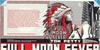
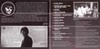
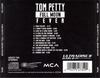
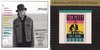
Tom Petty - Full Moon Fever (1989) CD

Year: 1989 (CD 1998)
Label: Mobile Fidelity Sound Lab (US), UDCD 735
Style: Rock, Southern Rock, Roots Rock
Country: Florida, U.S. (October 20 1950 - October 2 2017)
Time: 40:04
Format: Flac Tracks 16/44,1 kHz
Size: 274 Mb

Tom Petty picks his friends well. Touring behind Bob Dylan in 1986 helped him and his band, the Heartbreakers, make their most spontaneous and feisty record, 1987’s Let Me Up (I’ve Had Enough). And his tenure in the Traveling Wilburys let the usually straight-faced Petty loosen up even more: He came up with one of his funniest tunes — "Last Night" — but more important, his performances seemed to gain strength from the relaxed atmosphere. Instead of worrying about writing songs as barbed as Bob Dylan’s, playing guitar as tersely as George Harrison or singing as gloriously as Roy Orbison, Petty just casually leaned forward and played and sang as directly and freely as he could.
Full Moon Fever is another rewarding, low-key side project for Petty. Produced by fellow Wilbury Jeff Lynne, the record is technically Petty’s first solo outing, though all the Heartbreakers except for drummer Stan Lynch make an appearance. What’s more, all the Wilburys save one (Bob Dylan) also show up: Full Moon Fever has the same restless charm and barbed wit as the Wilburys’ LP.
Although Petty and Heartbreaker guitarist-songwriter Mike Campbell earn coproduction credits on the album, it is Lynne who holds sway. The former Electric Light Orchestra leader’s production technique often builds banks of keyboards and backing vocals so high it’s hard to see the song behind them, but on Full Moon Fever there are few of his characteristic excesses. In fact, the broader sound that Lynne brings to these twelve songs (most written by Petty and Lynne) usually fills them out without cluttering them. On songs like the brooding, deliberate rocker "I Won’t Back Down," Lynne adds his trademark layers with a slightly lighter touch than usual; only on the grand-sounding "Love Is a Long Road" do the synthesizers and extra vocals beef up an arrangement with fat instead of muscle.
The opening song, the delicate "Free Fallin’," is not only the standout on Full Moon Fever but also one of the most concise, well-rounded performances of Petty’s career. Over a spiral of acoustic guitars, Petty sings the tale of an abandoning lover. His story is full of internal inconsistencies — if he doesn’t miss her, why is the whole first verse about her? — that serve to underline the character’s misgivings. "I’m free!" Petty cries as he barges into the chorus, holding out some redemption for his narrator. But after a pause, he delivers the dark punch line: He’s not free, he’s merely "free fallin’." Although Lynne’s smooth backing vocals cushion Petty as much as they can, this is one story that holds no happy landing.
"Free Fallin’ " isn’t the only high point on this sprawling album. The hell-bent "Runnin’ Down a Dream," which offers a bruising solo by Campbell, suggests that Petty picked something up from touring with the ferocious Georgia Satellites, and "A Mind With a Heart of Its Own," a pop variation on the Bo Diddley beat, offers up offhand verses absurd and unexpected enough to make even Dylan smile. The barbs reach their peak on "Yer So Bad," which burps up a hilariously understated opening couplet ("My sister got lucky/Married a yuppie"); it’s a track that could have fit on Beatles ’65. "The Apartment Song" — more folk rock, but with a Chuck Berry edge — also engages in some nostalgia, with a drum break swiped wholesale from Buddy Holly’s "Peggy Sue."
Although Full Moon Fever doesn’t sound like a Petty-with-the-Heartbreakers record, there is much on the album to please longtime Petty fans. The chorus of "Depending on You," with its cascading guitar and keyboard parts, is the most overtly Heartbreaker-like, and the hard-earned lullaby "Alright for Now" recalls "It’ll All Work Out," from Let Me Up (I’ve Had Enough).
The most inexplicable track is a note-for-note cover of the Byrds’ "Feel a Whole Lot Better" that’s all too obvious — Petty’s voice has always been a ringer for Roger McGuinn’s, and this song is the clear antecedent to Petty’s "Listen to Her Heart." But Petty’s just-as-obvious love for the song steamrolls over most objections.
The whole point of Full Moon Fever, however, is that it makes room for something like "Feel a Whole Lot Better," which would never find a place on a Petty-Heartbreakers record. The album is a chance for Petty to explore, play and maybe fall on his face without having much at stake. After all, he’s already at work on his next effort with the Heartbreakers. So even if Full Moon Fever isn’t Petty’s best record, it sure sounds like it was the most fun to make.
(RollingStone magazine. May 4, 1989 4:00AM ET. By Jimmy Guterman)

01. Free Fallin' (04:17)
02. I Won't Back Down (02:57)
03. Love Is A Long Road (04:07)
04. A Face In The Crowd (03:59)
05. Runnin' Down A Dream (04:24)
06. Feel A Whole Lot Better (H) (00:29)
06. Feel A Whole Lot Better (02:50)
07. Yer So Bad (03:06)
08. Depending On You (02:48)
09. The Apartment Song (02:33)
10. Alright For Now (02:01)
11. A Mind With A Heart Of Its Own (03:30)
12. Zombie Zoo (02:57)
imagebam.com imagebam.com imagebam.com imagebam.com imagebam.com imagebam.com

TurboBit           KatFile

Wednesday, February 10, 2021

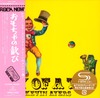
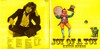
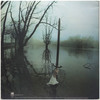
Kevin Ayers - Joy Of A Toy (1969) CD

Year: 1969 (CD 12.03.2014)
Label: Parlophone Records (Japan), WPCR-15524
Style: Rock, Progressive Rock
Country: Kent, England (16 August 1944 - 18 February 2013)
Time: 71:11
Format: Flac Tracks 16/44,1 kHz
Size: 432 Mb

Founder member of Soft Machine and a key figure in British psychedelic rock.
Kevin Ayers's debut solo album, Joy of a Toy, released in 1969, concluded with a song called All This Crazy Gift of Time. "All my blond and twilight dreams," sang Ayers in his signature, slightly wayward baritone, "all those strangled future schemes, all those glasses drained of wine ..."
In retrospect, it sounds like a statement of intent, though intent is perhaps too strong a word to apply to Ayers, whose singular songwriting talent was matched by a sometimes startling lack of ambition. "I lost it years ago; a long, long time ago," he told one interviewer in 2007, referring to his lack of ego and self-belief. "But, in a way, I don't think I've ever had it."
Ayers, who has been found dead at the age of 68 at his home in the medieval village of Montolieu in south-west France, was one of the great almost-stars of British rock. A founding member of Soft Machine, he was a key figure in the birth of British pastoral psychedelia, and then went on to enjoy cult status as a singer-songwriter in the late 1960s and early 70s. Among his champions were the late John Peel and the influential British rock journalist Nick Kent, who later wrote: "Kevin Ayers and Syd Barrett were the two most important people in British pop music. Everything that came after came from them."
Ayers was born in Herne Bay, Kent, the son of the journalist, poet and BBC producer Rowan Ayers, who later originated the BBC2 rock music programme The Old Grey Whistle Test. After his parents divorced and his mother married a civil servant, Ayers spent most of his childhood in Malaysia, where, he would later admit, he discovered a fondness for the slow and easy life.
At 12, he returned to Britain and settled in Canterbury. There, he became a fledgling musician and founder of the "Canterbury sound", an often whimsical English take on American psychedelia that merged jazz, folk, pop and nascent progressive rock.
Ayers's first band was the Wilde Flowers, whose line-up included various future members of Caravan as well as Robert Wyatt and Hugh Hopper, with whom he would go on to form Soft Machine in 1966. Alongside Pink Floyd, Soft Machine played regularly at the UFO club in London, becoming one of the key underground groups of the time.
In 1968, the group toured the US in support of the Jimi Hendrix Experience, a brush with rock stardom and relentless gigging that left the laid-back Ayers weary and disillusioned. He sold his Fender bass guitar to Hendrix's sideman Noel Redding, and fled to Ibiza with fellow Soft Machine maverick Daevid Allen. There he wrote the songs that would make up Joy of a Toy. It set the tone for much of what was to follow: Ayers's sonorous voice enunciating songs that ran the gamut from wilfully weird to oddly catchy, the whole not quite transcending the sum of the many varied and musically adventurous parts.
(Full version: www.theguardian.com/music/2013/feb/20/kevin-ayers)

01. Joy Of A Toy Continued (02:53)
02. Town Feeling (04:50)
03. The Clarietta Rag (03:20)
04. Girl On A Swing (02:49)
05. Song For Insane Times (04:01)
06. Stop This Train (Again Doing It) (06:05)
07. Eleanor's Cake (Which Ate Her) (02:54)
08. The Lady Rachel (05:17)
09. Oleh Oleh Bandu Bandong (05:35)
10. All This Crazy Gift Of Time (03:52)
11. The Lady Rachel - Extended First Mix [bonus track] (06:44)
12. Clarence In Wonderland (BBC Top Gear Session) [bonus track] (04:52)
13. Stop This Train (Again Doing It) (BBC Top Gear Session) [bonus track] (05:47)
14. Why Are We Sleeping (BBC Top Gear Session) [bonus track] (08:52)
15. You Say You Like My Hat (BBC Top Gear Session) [bonus track] (03:12)

imagebam.com imagebam.com imagebam.com imagebam.com

TurboBit           KatFile

Saturday, February 6, 2021

Hawkwind - Hawkwind (1970) CD

Year: 1971
Label: EMI Records (UK & Europe), 7243 5 30028 2 4
Style: Rock, Progressive Rock, Psychedelic Rock
Country: Ladbroke Grove, London, England
Time: 57:49
Format: Flac Tracks 16/44,1 kHz
Size: 325 Mb

Hawkwind (and it's various other incarnations) are a space rock band from London, England, active since November 1969. They are acknowledged as one of the earliest space rock groups. Their lyrics favor urban and science fiction themes while their general sound has gone through many incarnations and they have incorporated different styles into their music, including hard rock, progressive rock and psychedelic rock. They are also regarded as an influential proto-punk band.
They are best known for the song "Silver Machine" which became a number three UK hit single in 1972, but they scored further hit singles with "Urban Guerrilla" (another Top 40 hit) and "Shot Down in the Night." Twenty-two of their albums charted in the UK from 1971 to 1993. Although many musicians and dancers have come and gone, Dave Brock remains the sole original member.
(riffipedia.fandom.com/wiki/Hawkwind)

01. Hurry On Sundown (05:01)
02. The Reason Is? (03:30)
03. Be Yourself (08:06)
04. Paranoia (Part 1) (01:09)
05. Paranoia (Part 2) (04:09)
06. Seeing It As You Really Are (10:48)
07. Mirror Of Illusion (07:08)
08. Bring It On Home (03:17)
09. Hurry On Sundown [by Hawkwind Zoo] (05:05)
10. Kiss Of The Velvet Whip [by Hawkwind Zoo] (05:27)
11. Cymbaline [by Hawkwind Zoo] (04:04)

imagebam.com imagebam.com imagebam.com imagebam.com imagebam.com imagebam.com

TurboBit           KatFile

Friday, February 5, 2021

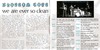
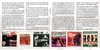
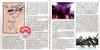
Blossom Toes - We Are Ever So Clean (1967) CD

Year: 1967 (CD 2007)
Label: Sunbeam Records (UK), SBRCD5035
Style: Psychedelic Rock, Rock
Country: London, England
Time: 70:31
Format: Flac Tracks 16/44,1 kHz
Size: 424 Mb

Blossom Toes were the twee-est band of all time-- twice as twee as the Dukes of Stratosphear covering "(Listen to the) Flower People" in front of an audience of animated chipmunks, thrice as twee as a Keane painting magically brought to life by a sprinkling of fairy dust and singing the Fluff Fluff Fluff Fluff and Cuddleyness catalogue. Originally the Ingoes, one of ten million British blues bands who desperately wanted to be the Yardbirds, they hooked up with their idols' manager Giorgio Gomelsky; just as flower power was taking off, they were directed to become psychedelicists and change their name, for reasons having less to do with LSD than pounds-shillings-pence.
In the new reissue's liner notes, the Toes claim their songs were all written by the time somebody played them an acetate of Sgt. Pepper's in the studio. If so, "Penny Lane"/"Strawberry Fields Forever" seems to have hit them like an acid bomb, because virtually every song here can trace its DNA to the Beatles' psychedelic moment, from the harmonies to Kevin Westlake's Ringofied drumming to the quick-changing orchestrations accompanying the chime of their twelve-string guitars to their general sense of persistently tuneful music-hall whimsy as the corridor behind the doors of perception.
They don't waste time getting around to it, either: The opening track begins with a backwards-guitar fade-in before singer/guitarist Brian Godding exclaims "Look at me I'm you! Look at me I'm you!" Godding was the band's main songwriter, although guitarist Jim Cregan also gets in a couple of good ones, especially "When the Alarm Clock Rings" (later recycled as the closing track of the Nuggets II compilation), and Westlake contributes a song called "The Remarkable Saga of the Frozen Dog", which is as look-at-me-I'm-high as you'd guess.
(pitchfork.com/reviews/albums/10497-we-are-ever-so-clean/. Contributor: Douglas Wolk. August 8 2007)

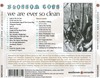
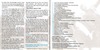
01. Look At Me I'm You (03:55)
02. I'll Be Late For Tea (02:42)
03. The Remarkable Saga Of The Frozen Dog (03:02)
04. Telegram Tuesday (02:37)
05. Love Is (02:41)
06. What's It For? (03:03)
07. People Of The Royal Parks (02:20)
08. What On Earth (02:52)
09. Mrs. Murphy's Budgerigar (02:38)
10. I Will Bring You This And That (02:55)
11. Mister Watchmaker (02:22)
12. When The Alarm Clock Rings (02:26)
13. The Intrepid Balloonist's Handbook Volume 1 (02:12)
14. You (02:45)
15. Track For Speedy Freaks (or Instant LP Digest) (01:29)
16. Everybody's Talking (LP out-take) (02:34)
17. Look At Me I'm You (instrumental track) (03:49)
18. I'll Be Late For Tea (alternate take) (02:30)
19. Mister Watchmaker (live) (03:10)
20. I'll Be Your Baby Tonight (45 A-Side) (03:24)
21. Jim Cregan Interview (00:59)
22. Love Is (live) (03:02)
23. Collects Little Girls (demo) (04:05)
24. Hometime (demo) (03:45)
25. Looking Up I'm Looking Back (demo) (03:03)

imagebam.com imagebam.com imagebam.com imagebam.com imagebam.com imagebam.com

TurboBit           KatFile

Friday, January 22, 2021

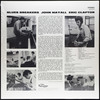
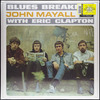
John Mayall - Blues Breakers with Eric Clapton (1966) [Vinyl Rip] 180g, 4 bonus tracks

Year: 22 July 1966 (LP 2008)
Label: Decca Records, Lilith Records (Russia), 900020
Style: Blues Rock
Country: Macclesfield, England
Time: 54:51
Format: Flac Tracks 16/44,1 kHz
Size: 342 Mb

Blues Breakers with Eric Clapton (a.k.a. The Beano Album) is a 1966 blues/blues rock album recorded by John Mayall & the Bluesbreakers with Eric Clapton as part of the band. It is the second album credited to John Mayall after the live John Mayall Plays John Mayall. Clapton left to form Cream after this recording, though would team up again in 1971 for the double LP Back to the Roots.
It is also known as The Beano Album because of its cover photograph showing Eric Clapton reading The Beano, a British children's comic. Clapton stated in his autobiography that he was reading The Beano on the cover because he felt like being "uncooperative" during the photo shoot. The photographer was Derek Wedgbury and the location was near the Old Kent Road.
In 2003 the album was ranked number 195 on Rolling Stone magazine's list of The 500 Greatest Albums of All Time. The album was included in Robert Dimery's 1001 Albums You Must Hear Before You Die. Apart from being one of the most influential blues albums, it also started the now-legendary combination of a Gibson Les Paul guitar through an overdriven Marshall Bluesbreaker amplifier.
Originally, John Mayall intended for his second album to be also a live one in order to capture the guitar solos performed by Eric Clapton. A set was recorded at the Flamingo Club, with Jack Bruce (with whom Clapton would subsequently work in Cream) on bass. The recordings of the concert, however, were of bad quality and were scrapped.
The album consists of blues standards by long-established artists such as Otis Rush, Freddie King and Robert Johnson, as well as a few originals penned by Mayall and Clapton. Most tracks serve as a showcase for Clapton's playing. Although he sang on several Yardbirds' recordings, "Ramblin' on My Mind" was Clapton's first recorded solo lead vocal performance, which Eric had been reluctant to record.

Musicians:

John Mayall - lead vocals, piano, Hammond B3 organ, harmonica
Eric Clapton - lead guitar, lead vocals on "Ramblin' on My Mind"
John McVie - bass guitar
Hughie Flint - drums

01. A1 All Your Love (03:34)
02. A2 Hideaway (03:15)
03. A3 Little Girl (02:35)
04. A4 Another Man (01:46)
05. A5 Double Crossing Time (03:02)
06. A6 What'd I Say (04:27)
07. A7 Parchman Farm (02:22)
08. A8 Ramblin' On My Mind (03:08)
09. A9 It Ain't Right (02:39)
10. B1 Key To Love (02:06)
11. B2 Have You Heard (05:52)
12. B3 Steppin' Out (02:28)
13. B4 They Call It Stormy Monday (Bonus Live) (04:33)
14. B5 Intro To Maudie (Bonus Live) (02:25)
15. B6 Have You Ever Loved A Woman (Bonus Live) (06:40)
16. B7 Hoochie Coochie Man (Bonus Live) (03:53)

imagebam.com imagebam.com imagebam.com imagebam.com

TurboBit          KatFile

Thursday, January 21, 2021

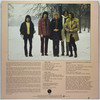
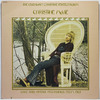
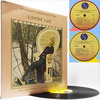
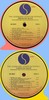
Christine McVie (Fleetwood Mac) - The Legendary Christine Perfect Album (1976) [Vinyl Rip]

Year: 1970 (LP 1976)
Label: Sire Records (USA), SR 6022
Style: Rock
Country: Lancashire, England (12 July 1943)
Time: 37:21
Format: Flac Tracks 16/44,1 kHz
Size: 206 Mb

With her naturally smoky low alto vocal style and a knack for writing simple, direct, and memorable songs about the joys and pitfalls of love, Christine McVie has had a long and productive musical career while seldom insisting on being center stage. Born Christine Anne Perfect on July 12, 1943, in the small village of Bouth, the daughter of a concert violinist and a faith healer, a combination that just begs for uniqueness, McVie began playing the piano at the age of four and then found herself seriously studying the instrument at the age of 11, continuing her classical training until she was 15. That?s when she discovered rock & roll. While studying sculpture at an arts college near Birmingham for the next five years, she immersed herself in the local music scene, joining the band Sounds of Blue as a bassist. By the time McVie graduated with a teaching degree, Sounds of Blue had broken up, and she moved to London. In 1968 she reunited with two of the band?s former members, Andy Silvester and Stan Webb, in the British blues band Chicken Shack, playing piano and contributing vocals. The band released two albums, 40 Blue Fingers, Freshly Packed and Ready to Serve in 1968 and O.K. Ken? in 1969, and garnered a Top 20 hit in the U.K. with McVie?s impressive version of Etta James? ?I?d Rather Go Blind.? She left the band in 1969 after meeting Fleetwood Mac bassist John McVie, marrying him a year later, just after the release of her first solo album, the self-titled Christine Perfect.
Following the marriage, and now known as Christine McVie, she joined Fleetwood Mac as a pianist and singer and remained a member for the next 25 years, becoming a superstar in 1975 as part of the Lindsey Buckingham/Stevie Nicks version of the band. She and John McVie divorced in 1978, although both continued as members of Fleetwood Mac through the albums Tusk (1979) and Mirage (1982). She recorded and released a second solo album, simply called Christine McVie, in 1984. She married keyboardist Eddy Quintela in 1986. They would separate four years later in 1990 (and divorce later in the decade), just as the band -- now minus Buckingham -- released Behind the Mask. Following the tour for that album, McVie announced to the band that she would not longer go on the road, although she continued to work in the studio with them, contributing five songs to 1995?s Time. A reunion of the Buckingham/Nicks incarnation of the band for 1997?s live The Dance followed, and McVie did the resulting tour with the group before officially retiring from Fleetwood Mac in 1998 after the group?s induction into the Rock and Roll Hall of Fame that year. She then lived quietly out of the music limelight until the release of her third solo album, In the Meantime, in 2004.
(Steve Leggett, Rovi. www.billboard.com/artist/299258/christine-mcvie/biography)

01. A1 Crazy Bout You Baby (03:05)
02. A2 I'm On My Way (03:13)
03. A3 Let Me Go (Leave Me Alone) (03:39)
04. A4 Wait And See (03:18)
05. A5 Close To Me (02:45)
06. A6 I'd Rather Go Blind (03:16)
07. B1 When You Say (03:18)
08. B2 And That's Saying A Lot (03:02)
09. B3 No Road Is The Right Road (02:53)
10. B4 For You (02:50)
11. B5 I'm Too Far Gone (To Turn Around) (03:30)
12. B6 I Want You (02:26)

imagebam.com imagebam.com imagebam.com imagebam.com

TurboBit          KatFile

Sunday, January 17, 2021

Rick Wakeman - The Myths and Legends Of King Arthur (1975) [Vinyl Rip, 1st press]

Year: 1975 (LP 1975 1st Press)
Label: A & M Records (UK), AMLH 64515
Style: Symphonic Rock, Rock
Country: Perivale, London (born 18 May 1949)
Time: 44:40
Format: Flac Tracks 16/44,1 kHz
Size: 263 Mb

Solo Career:
In August of 1971 Wakeman left Strawbs and joined a group called Yes as a replacement for one of the original band members, Tony Kay. Wakeman’s first album with that group was released in early in 1972. The recording, called Fragile, drew praise as a classic example of progressive rock, and by 1972, the band was a worldwide sensation. Wakeman played with Yes until 1974 when Patrick Moraz replaced Wakeman who left the group to further his solo career. Wakeman returned to Yes in 1976 and remained with the group until the end of the decade, after which time he continued a sporadic association with the group.
Even during his years with Yes, Wakeman spent a great deal of time in solo recording sessions for A&M Records. His earliest releases received notable reviews and earned gold records. Six Wives of Henry VIII was released in January of 1973, and Journey to the Center of the Earth appeared in 1974. Journey, recorded with the London Symphony Orchestra and narrated by David Hemmings, was an original Wakeman composition, based on the Jules Verne novel by the same name. The recording topped the charts in England, and Wakeman performed the composition at London’s Royal Festival Hall on January 18, 1974. He recorded his next album, Myths and Legends of King Arthur and the Knights of the Round Table, with the English Chamber Choir in 1975. Myths received mixed reviews, and Wakeman recorded and released afourth album, No Earthly Connection, in 1976, shortly before he rejoined with Yes. His reunion with Yes was encouraged by the resurgence of longer, symphonic renditions by the group, music that was abandoned during Wakeman’s absence. The Wakeman charisma was seen especially on their 1977 gold album, Going for the One, and their platinum release, Tormato, in 1978. According to Irwin Stambler in Encyclopedia of Pop, Rock Soul, Wakeman returned to Yes because, “they were back to playing the kind of music they should be playing.” Wakeman also recorded two solo albums for A&M during the nextfewyears: CriminalRecordin 1977, and Rhapsodies in 1979.
In 1980 Wakeman left Yes once more and signed with Charisma Records. Later in 1990, he reunited with Yes co-founder Jon Anderson Bruford, to try to reignite Yes. Although the reunion failed to earn critical approval, the music received a warm reception from audiences. In 1989 Wakeman rejoined with his old Yes bandmates to form the group Anderson, Bruford, Wakeman, and Howe. The foursome released an album that sold over a million copies worldwide; they tou red extensively that year, and in 1991 their album, Union, sold over two million copies worldwide. Wakeman toured extensively throughout the United States with Yes in 1977, 1978, 1979, and again in 1991.
(www.encyclopedia.com/education/news-wires-white-papers-and-books/wakeman-rick)

Rick Wakeman - synthesisers, keyboards, grand piano
Gary Pickford-Hopkins - lead vocals
Ashley Holt - lead vocals
Geoffrey Crampton - lead and acoustic guitars
Roger Newell - bass guitar
Barney James - drums
John Hodgson - percussion
New World Orchestra, English Chamber Choir

01. A1 Arthur (07:26)
02. A2 Lady Of The Lake (00:46)
03. A3 Guinevere (06:44)
04. A4 Sir Lancelot And The Black Knight (05:22)
05. B1 Merlin The Magician (08:51)
06. B2 Sir Galahad (05:51)
07. B3 The Last Battle (09:38)

imagebam.com imagebam.com imagebam.com imagebam.com imagebam.com imagebam.com imagebam.com imagebam.com imagebam.com

TurboBit           KatFile

Saturday, January 16, 2021

West Coast Pop Art Experimental Band - Volume Two (1967) CD

Year: 1967 (CD 2001)
Label: SUNDAZED Records (USA), SC 6174
Style: Rock, Psychedelia
Country: Los Angeles, California, US
Time: 39:10
Format: Flac Tracks 16/44,1 kHz
Size: 225 Mb

Contributor: Dave Stephens
With a stupid name like that it was always pretty unlikely that it would work out right for the band.
Couple in the fact that the band’s leader saw himself as the incarnation of hip/alternate, and …
… that the guy who’s reputed to have put the key components of the band together, Kim Fowley, while having a deserved cult following, has never been strongly associated with serious music,
then it might come as a surprise to learn that The West Coast Pop Art Experimental Band managed to release six albums, some of which contained some really good music.
There were two parts to the jigsaw. The first part was Bob Markley, adopted son of a wealthy oil magnate. Bob had studied law, which was to come in useful, but he was also an aspiring record star – he’d released a couple of singles on his own label. The other part was an existing band, the Laughing Wind, who’d also cut a few singles. The band comprised brothers Danny and Shaun Harris, on lead and bass guitar respectively, Michael Lloyd also on guitar, plus John Ware, drums. All bar Ware handled vocals. Most of the boys had worked in previous bands in the L.A. area.
At a party held in Markley’s Beverly Hills mansion in August 1965, attended by the Harris Brothers, Michael Lloyd, Kim Fowley and plenty more, with musical entertainment provided by the Yardbirds amongst others, our hero/anti-hero had one of those eureka moments and decided that groups were the in thing, and, armed with the introduction from Fowley, proposed to the Laughing Wind that, if he could join the group as vocalist and songwriter, he would purchase new gear for them plus a light show and would cover the boys’ touring expenses. This was agreed and Markley came up with the West Coast Pop Art Experimental Band name. Not only that, he ensured that legally he owned the band’s name and that he handled the music publishing.
The first album from the WCPAEB, released on the tiny indie FiFo Records (see Footnotes) was titled West Coast Pop Art Experimental Band Volume One, perhaps rather optimistically, since it implied a future. Without wishing to be unduly cruel, there wasn’t a lot on the album that signified there might have been a future. Much of it was garage in sound – this was 1966 – but slightly more tender in nature than some bands that got classified under that heading. Outside of five originals which I’ll come on to, the content consisted of covers, some predictable like You Really Got Me and yet another Louie Louie, some rather less predictable including Chris Kenner’s New Orleans rolling rocker Something You Got (a not unpleasing workout which did capture some of the Crescent City laid-back feel) and Oscar Brown/Nat Adderley’s Work Song. Unlike the Georgie Fame vocal version of the song which might have been a Brit source, this take was purely instrumental, in line with the Cannonball Adderley record.
There were two Dylan covers, It’s All Over Now Baby Blue and She Belongs To Me. The first was reasonable but paled in comparison to the versions from Them and the 13th Floor Elevators (with the last named taking the biscuit for sheer freakiness). However the WCPAEB’s version of She Belongs To Me definitely warrants a listen. Starting out with heavy fuzz bass, the record eventually disappears in a storm of feedback and distortion. In comparison, the vocal, which lasts for little more than a minute, is precise and controlled, sounding passably like Dylan without falling into the trap of pastiche. The whole thing is over in less than two minutes though one could well imagine them stretching out on stage.
Of the five originals, three were from Bob Markley with two being Kim Fowley co-writes. Two of this trio were unremarkable attempts at psych, while the other was a soft folk rock thing, not unlike the sort of song P.F. Sloan was producing in the time frame. Which leaves two, I Won’t Hurt You (on which Markley gets another co-write along with Shaun Harris and Michael Lloyd), and If You Want This Love. Both were decent folk rock sounding affairs which was probably why they were selected to turn up again on the group’s second album in more fully realised versions.
Before leaving this set I would note that, for many years the LP was very difficult to get hold of (which didn’t do any harm to the band in terms of cult status), but in 1997 a CD version was released via Sundazed which doubled the number of tracks to 22. It is believed that most, possibly all, of the extra tracks were from the Laughing Wind prior to morphing into the WCPAEB. Certainly they are generally softer in nature with more of an emphasis on harmonies. Their cover of the Left Banke’s She May Call You Up Tonight would illustrate this superbly if only it was on YouTube!
One gets the impression that Markley, who very much saw himself as leader with the rest almost as paid employees, was keen to expunge any memory of the first album, since the second, which saw release on the far more prestigious Reprise label, was entitled The West Coast Pop Art Experimental Band Part One. I would assume that it was only ‘Part One’ rather than ‘Volume One’ because the latter had been used. Whatever, Markley, with or without the band, evidently saw this as the start and given his general outlook that would probably have been, in his eyes, “the start of something big”.
It wasn’t – the start of something big that is – but it was a mighty fine album in its own right. From the first few bars of track #1, Shifting Sands, you were aware that this was on a different level to the first outing. There was a balance of eight relatively conventional, often Byrds inspired songs, and three freaky ones. If that balance was slightly more skewed to the more accessible stuff, I’d classify this album as great. As it is it’s merely very very good.
The detail: let’s take those freaky ones first. Help, I’m A Rock is, of course, the number from the first Mothers Of Invention album, and it begs the question, why would you want to hear this from anyone other than Frank and the Mothers? Apart from some slight curiosity which, I found, disappeared rather quickly, my answer would be that you wouldn’t. Even the original wasn’t something you would play very frequently but it was essentially Zappa, no one else. I would call Leiyla, Bo Diddley meets Monster Mash. A perfectly good Diddley based backing track with a simplistic but acceptable vocal is marred by a kitsch horror show on top. It does develop but that doesn’t mean it gets better. The most successful of this bunch is 1906. Over a fast guitar + choral riff a narrator intones nonsense lines interspersed with “I don’t feel well” pleas. Presumably a bad trip but considerably more acceptable than the other ‘advanced’ efforts. Markley himself was so impressed with these tracks that Help, I’m A Rock and 1906 were the A-sides of the two singles issued from the album.
(www.toppermost.co.uk)

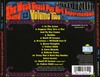
01. In The Arena (04:14)
02. Suppose They Give a War and No One Comes (03:41)
03. Buddha (02:08)
04. Smell of Incense (05:51)
05. Overture - WCPAEB Part II (01:32)
06. Queen Nymphet (02:20)
07. Unfree Child (04:05)
08. Carte Blanche (02:45)
09. Delicate Fawn (02:31)
10. Tracy Had a Hard Day Sunday (04:36)
11. Smell of Incense (single mix) (02:28)
12. Unfree Child (single mix) (02:52)

imagebam.com imagebam.com imagebam.com imagebam.com imagebam.com imagebam.com

KatFile          TurboBit